how to decide what lower receiver to buy for an ar15 build
There'due south nothing similar assembling your ain AR-15 lower receiver for personal satisfaction and customization.
I'll guide you through everything with minimal tools and tons of tips I've learned the hard way!
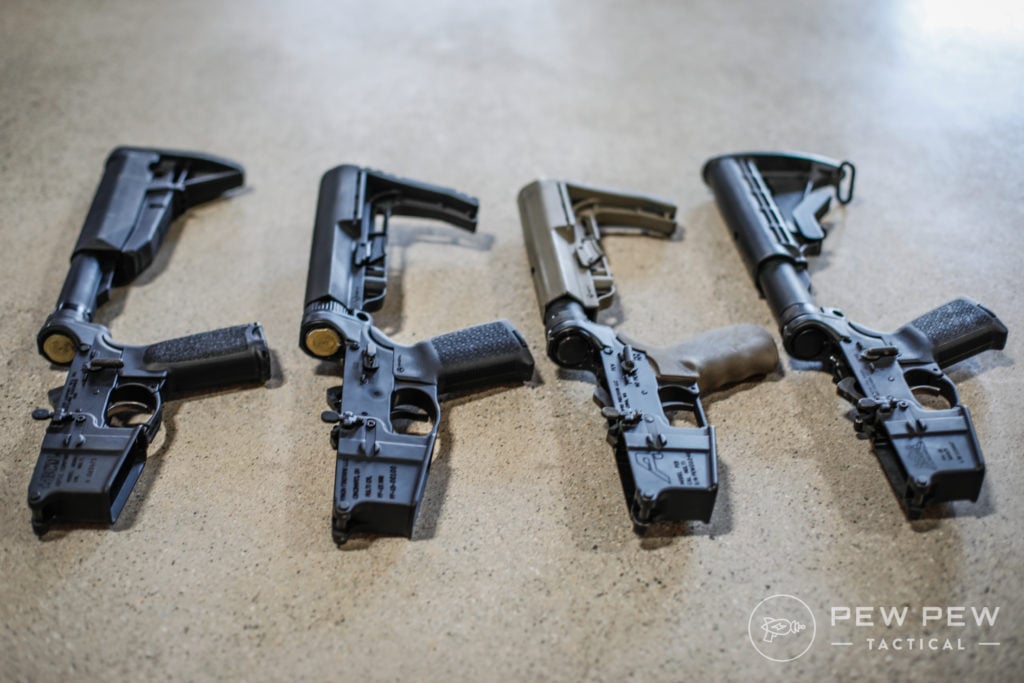
And so become prepare for A LOT of pictures that will brand building your lower a breeze. Plus a bonus of the upgrades I immediately did to my lower to make it perfect for 3-Gun competitions.
But first…a disclaimer that this is for educational use but. If you don't have the correct tools or experience, delight have this washed by a professional person or buy a completed rifle (Best AR-xv Buyer's Guide).
Table of Contents
Loading...
Parts
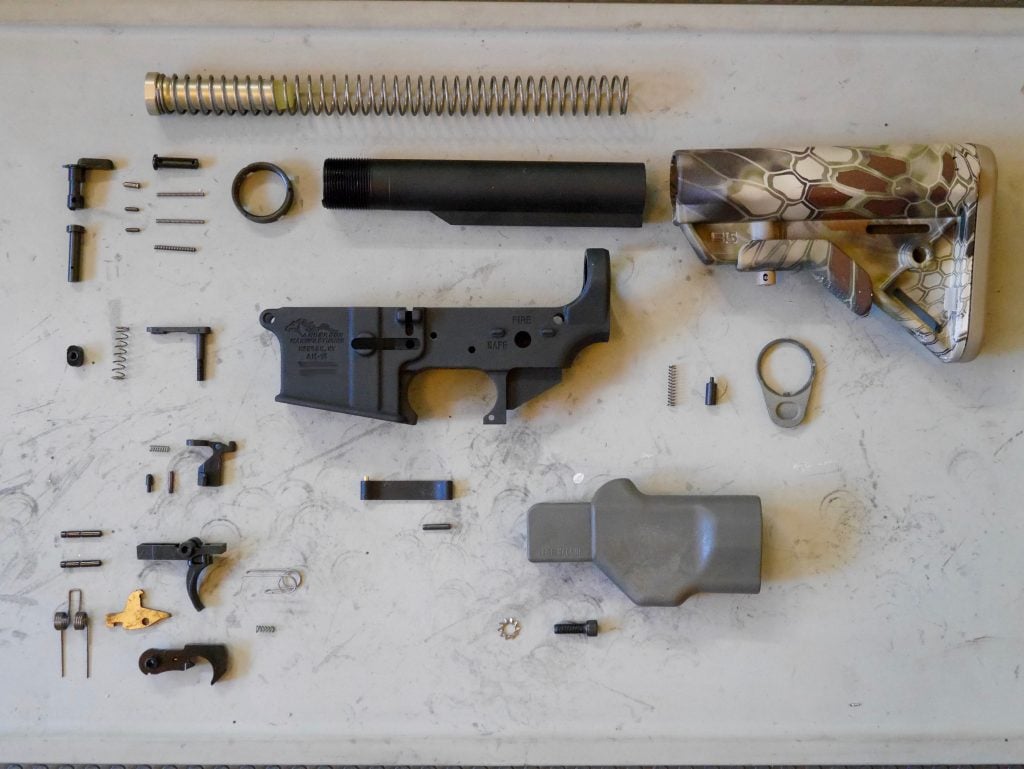
I went with a California featureless build then there'southward the funky looking grip. But otherwise, everything is pretty standard.
I haven't found much difference between lower parts kits and buffer tube assembly's as long as at that place are decent reviews and not a no-proper noun company:
- Anderson stripped lower receiver ($50): As well check to see what your local gun shop has to avert shipping and extra fees.
- Anderson lower parts kit ($75)
- Mil-Spec Buffer Tube Associates ($60)
- Bravo B5 Stock ($60)
- Hammerhead Grip ($30)
Tools
- Dial Prepare ($xv): I prefer contumely so you don't mar upward your lower receiver and information technology'southward adept for lots of other gun stuff also
- Long Arm Hex Fundamental Set ($12): Y'all'll be using hex keys or Allen wrenches in a lot of installations. Go with the long arm versions for extra accomplish.
- Hammer ($ten): I like the rubber/plastic ends instead of standard steel since there are very few times when you actually need that much strength…likewise if you use it direct on gun parts, you will not mar the stop
- C-Clench ($x): Not super necessary but useful to install the trigger baby-sit, four-inch should be good
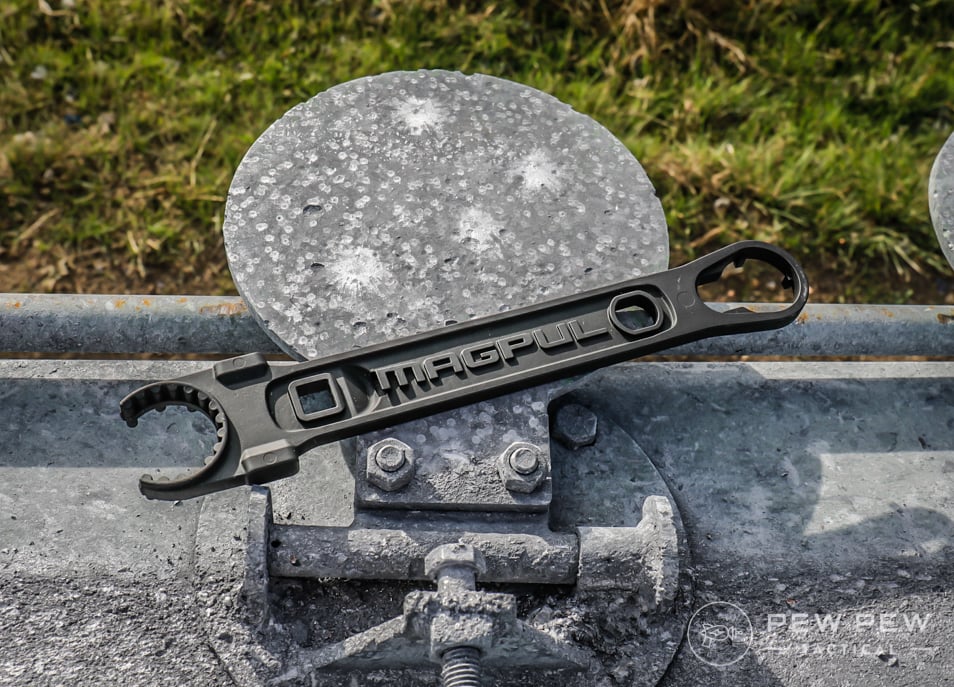
- AR-xv Combo Tool ($xx): Good for installation of the castle nut, but more useful for upper receiver builds
- Utility Knife ($vii): Needed for the pivot pivot installation
Alright, allow'due south get onto the actual build!
Magazine Catch Assembly
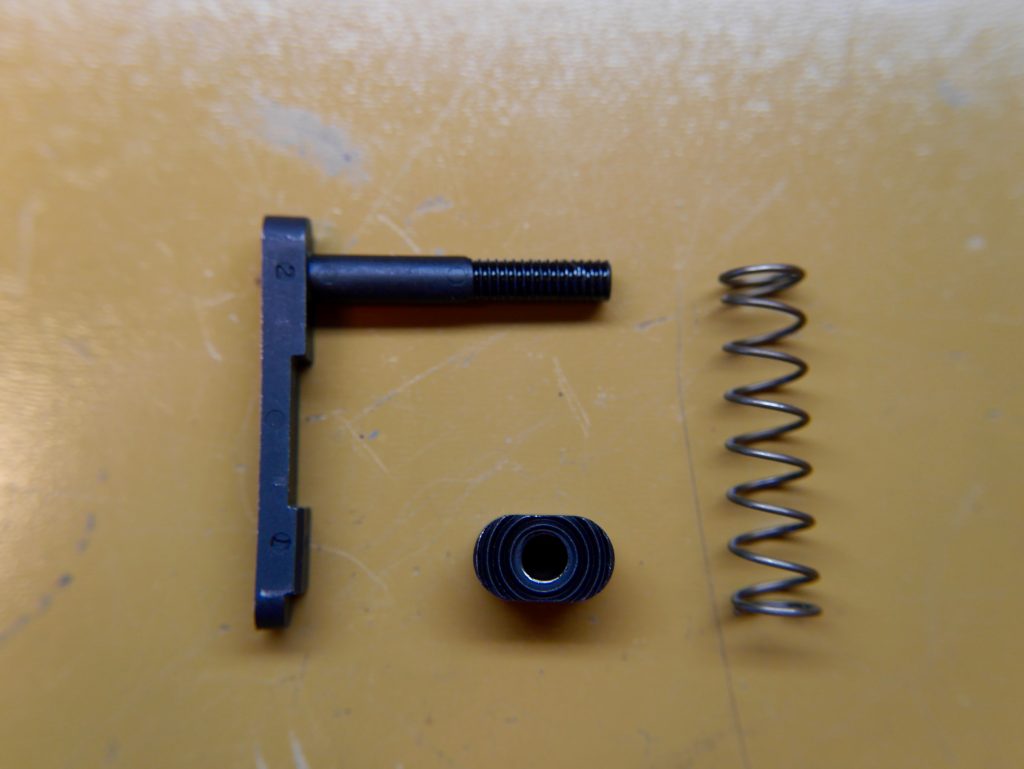
You tin can commencement your AR-15 lower receiver build many different ways but I similar knocking out some of the easier ones first for quick wins.
Discover these three parts along with your lower receiver. The magazine bound is the largest width spring in your kit.
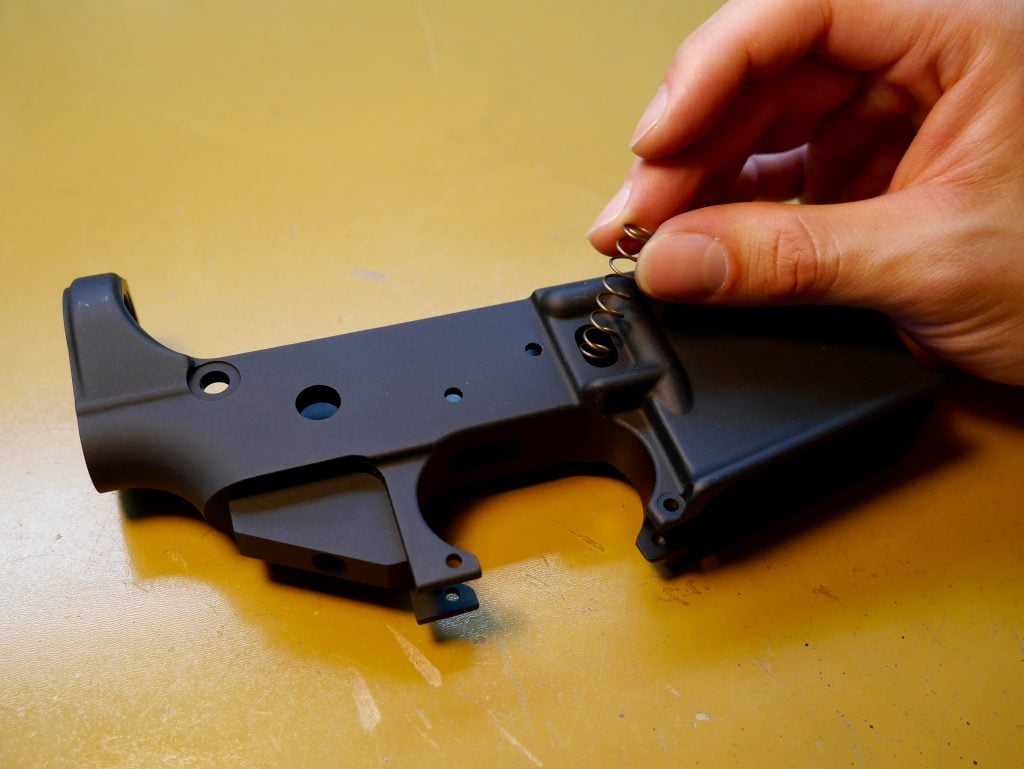
Identify the mag release jump into the hole shown in a higher place.
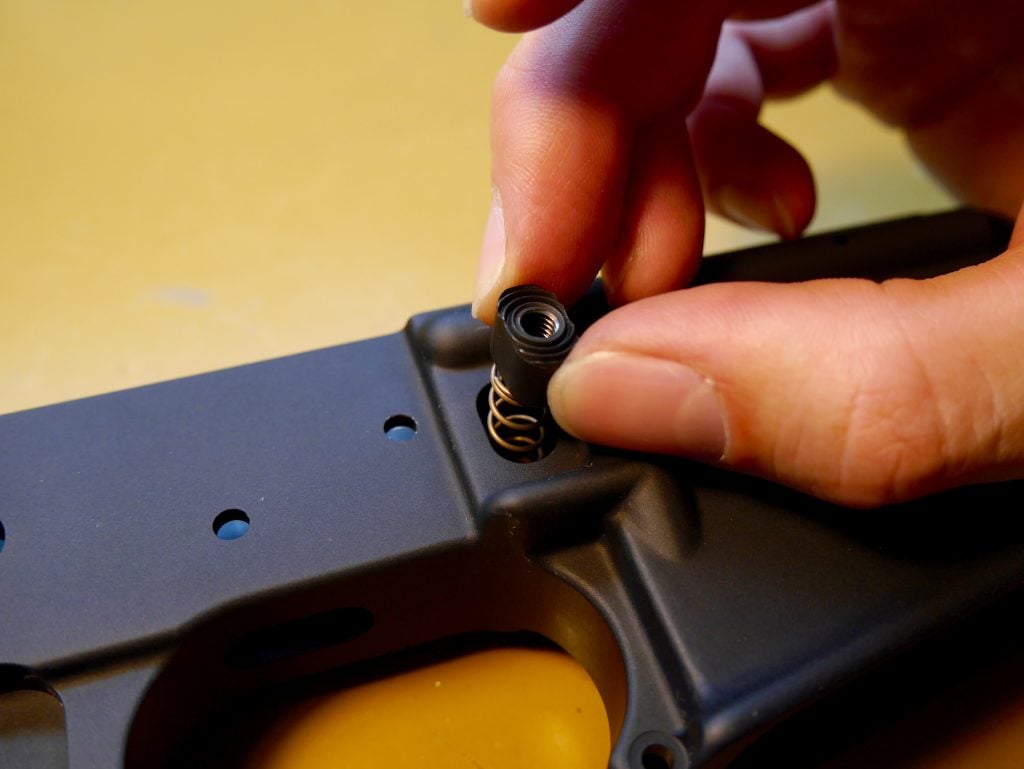
Place the magazine release button on pinnacle of it with the serrated side upward.
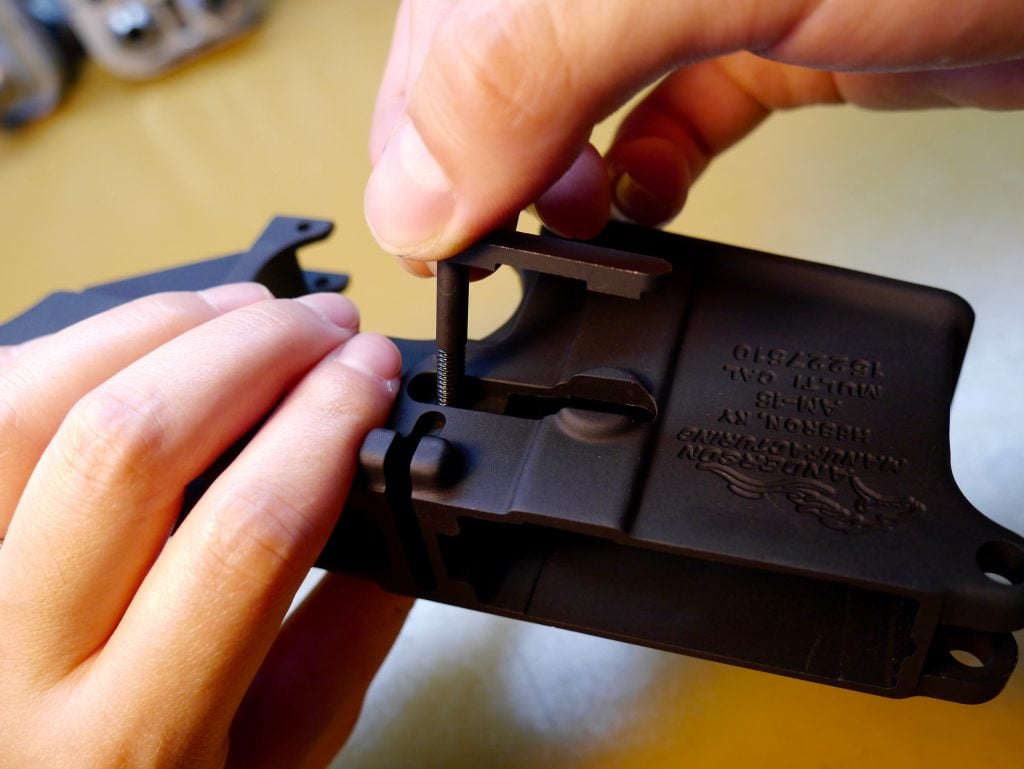
Press in the magazine release push button and flip the receiver over to starting time threading in the magazine grab.
It might be a little catchy the starting time time you do information technology since you have to maintain decent pressure on the push to get in affluent against the receiver while matching up the threads. Righty-tighty!
Make certain the catch doesn't scrape against the raised portions of the receiver.
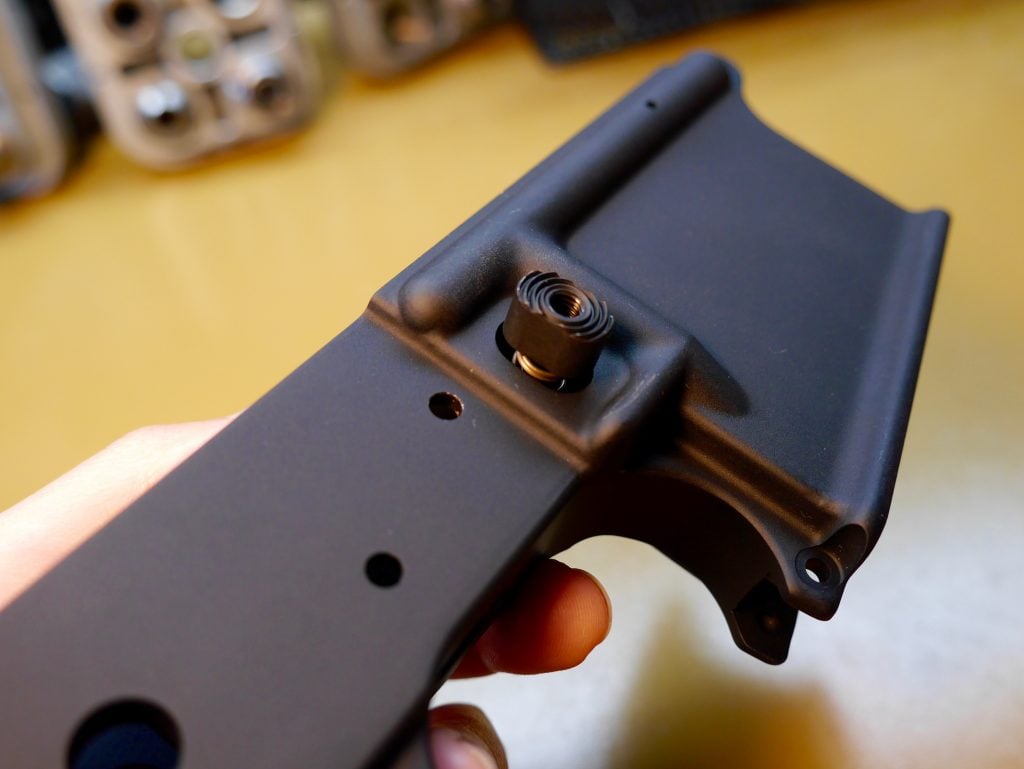
One time you take it threaded slightly you can release the pressure and rest your fingers for a little.
Then get ready to do information technology over again!
Press down the magazine release even further into the receiver past the affluent line and tighten the magazine catch a couple more than times.
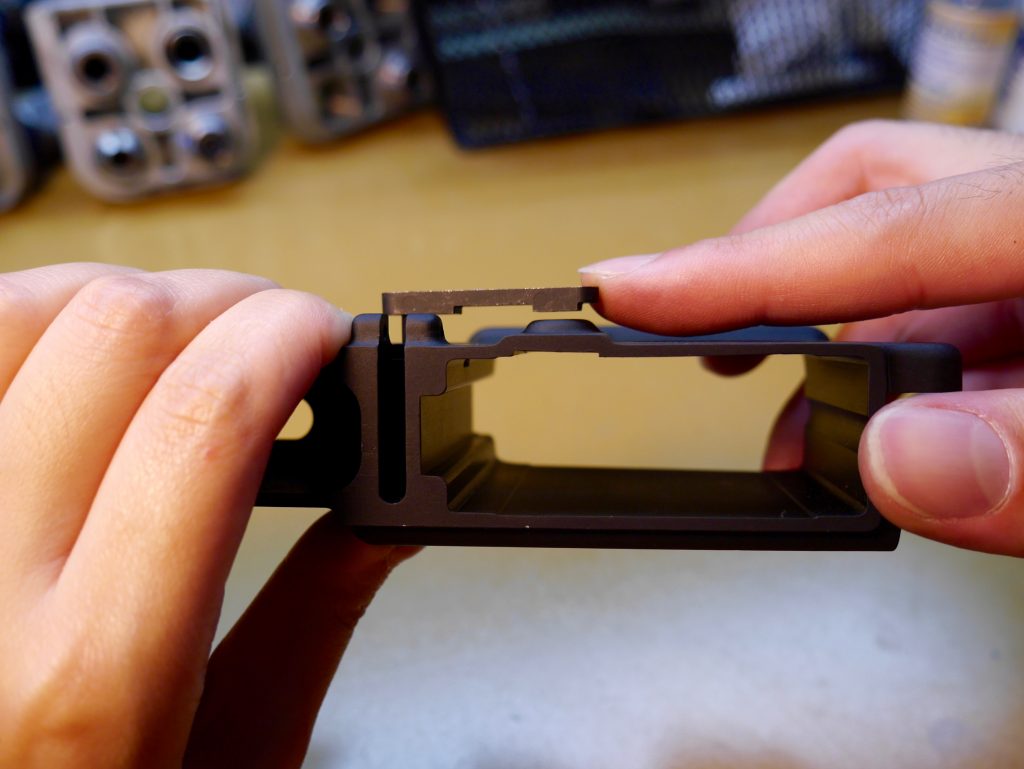
Check once in a while.
Hither you lot tin see that there's a gap betwixt the mag take hold of and the receiver when you're pressing the mag release button flush.
Y'all'll need to tighten more or else the magazine take hold of could fail to go back into the receiver during a reload.
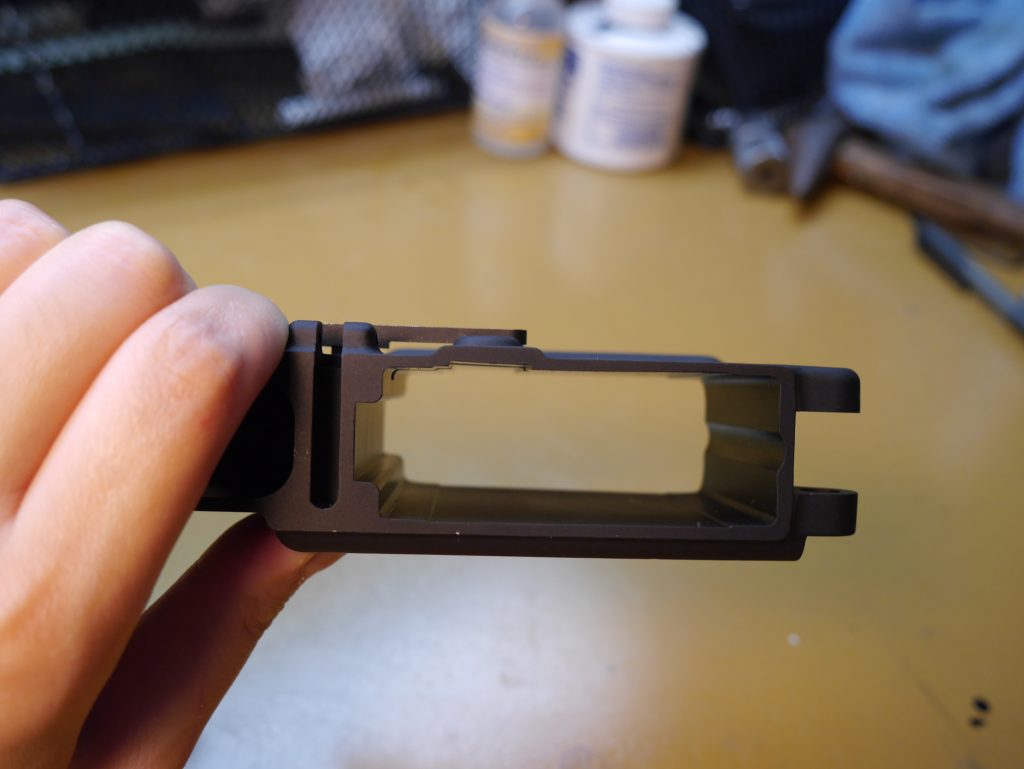
This is a good distance where the magazine catch will not leave the receiver unless somehow you manage to really smash in the magazine release push button.
You tin test with some of your mags to make sure it catches and releases.
Congrats! You've installed the first section of your AR-15 lower receiver.
Trigger Guard Assembly
Some lowers have this office every bit role of the stripped lower…but almost probable you'll have to practice it yourself.
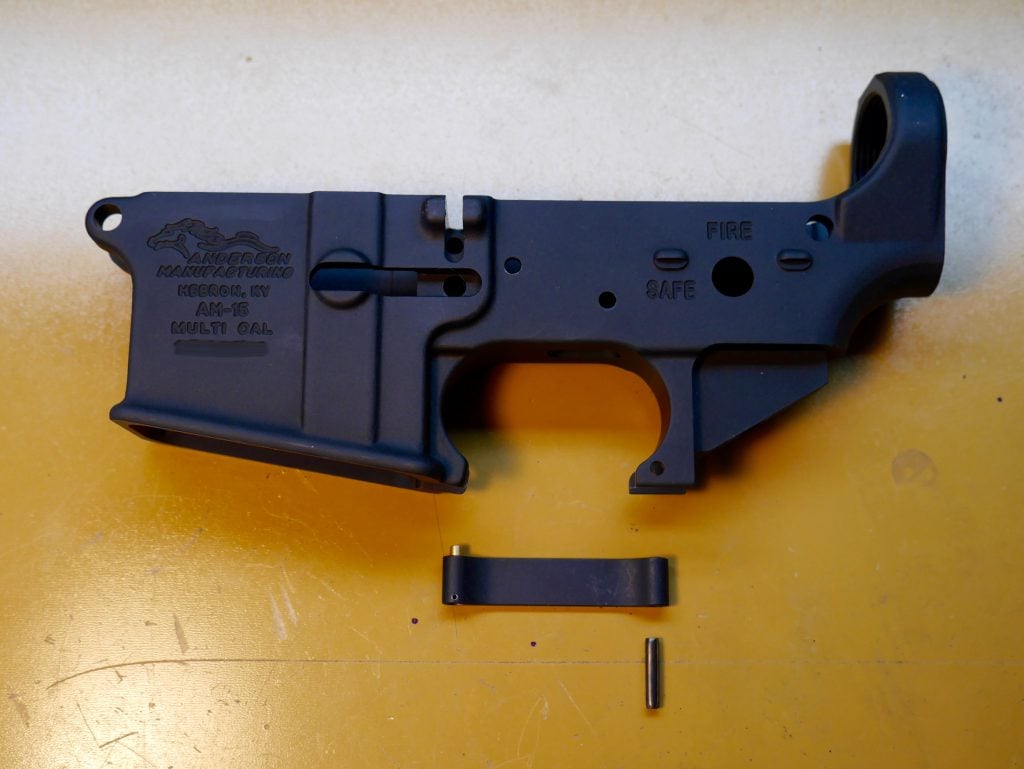
Find the trigger guard and the longer roll pin.
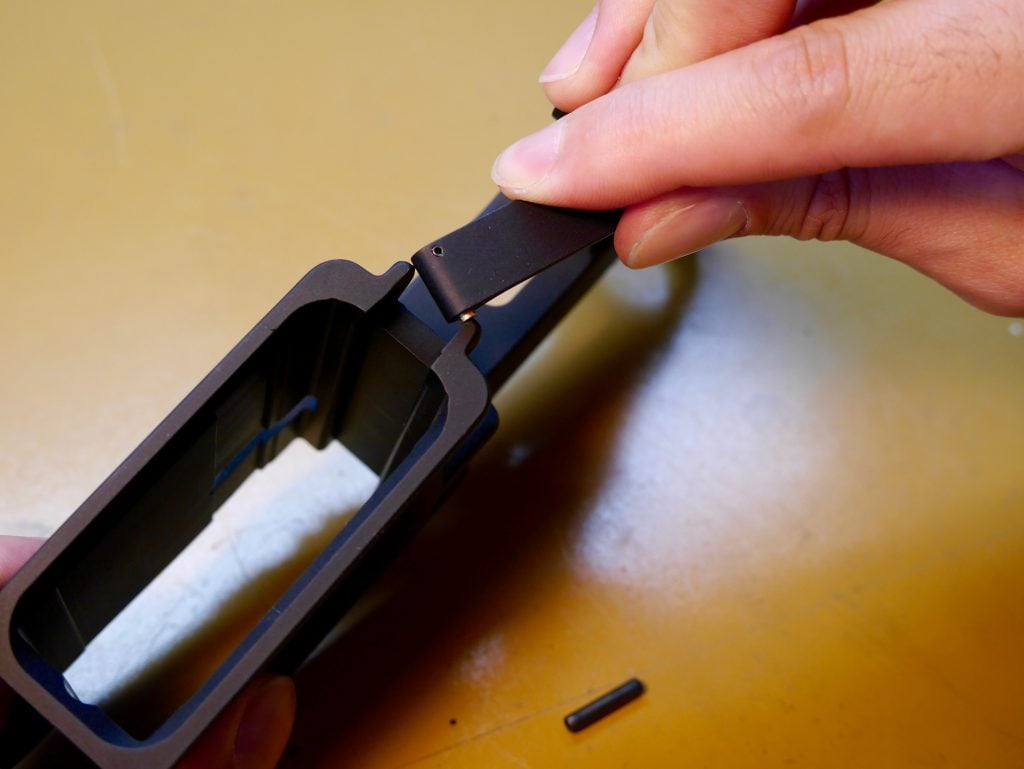
Depress the pin of the trigger guard which will be closer to the magazine well.
Don't worry, the two sides are differently sized and so you tin can't mess it up. And so but slip it in.
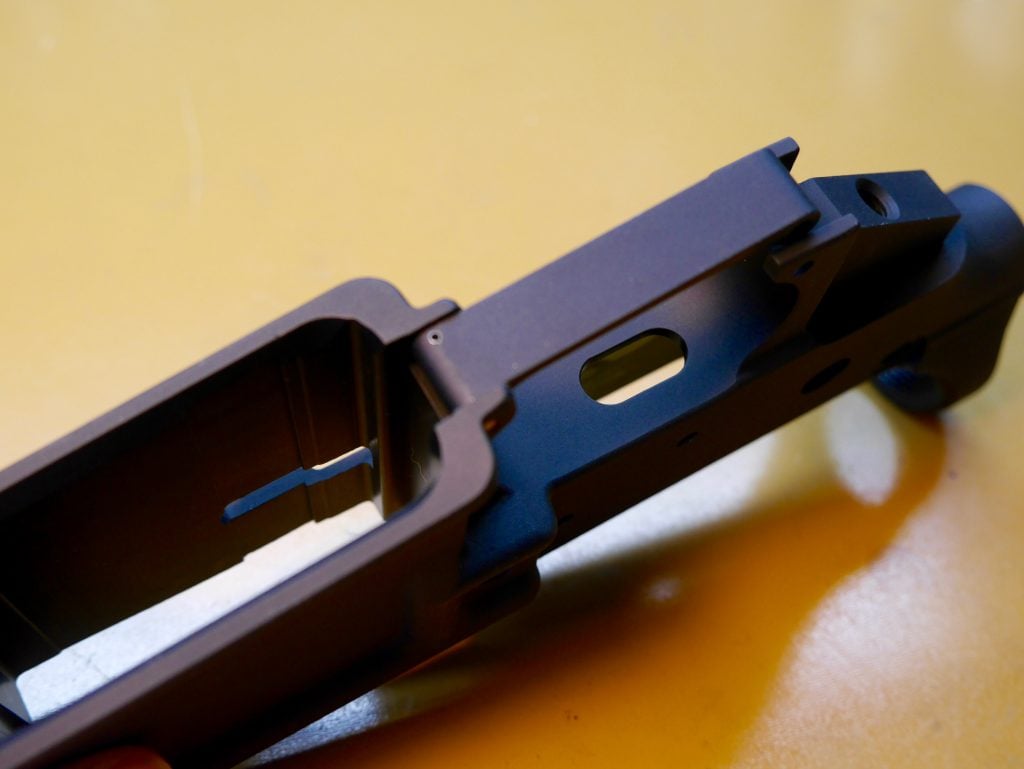
Sometimes I detect that the other side has a hard time dropping in so I lightly printing down or even use the plastic hammer (lightly) if it's slightly more stuck.
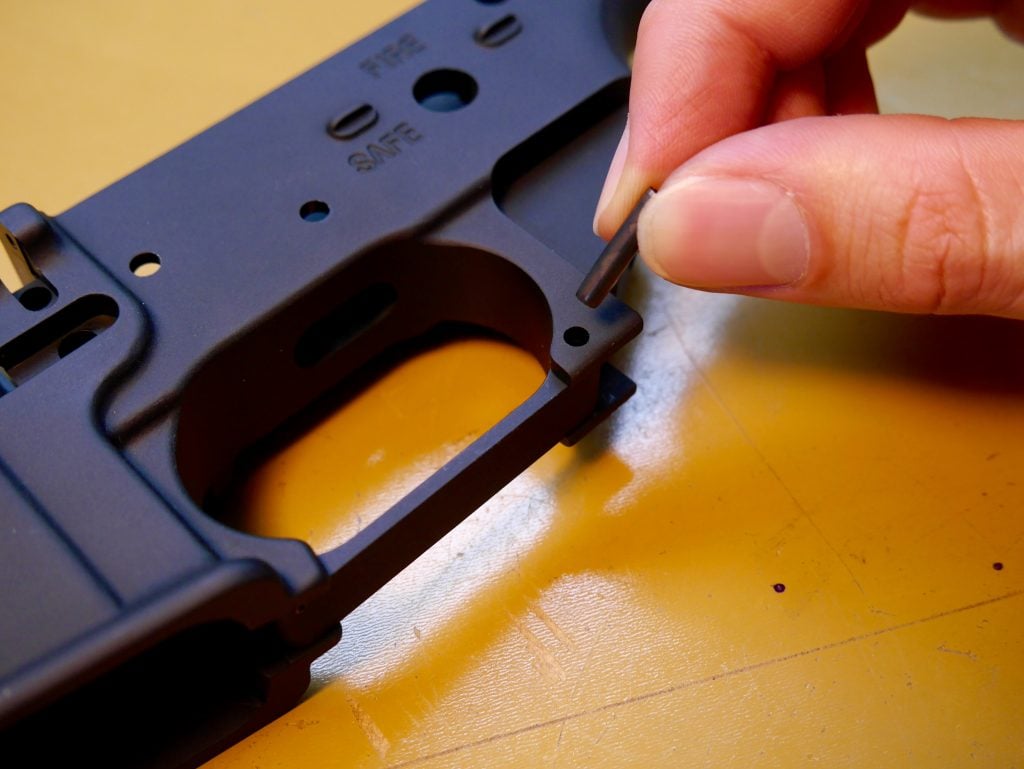
Make sure everything is lined upwards for the roll pivot.
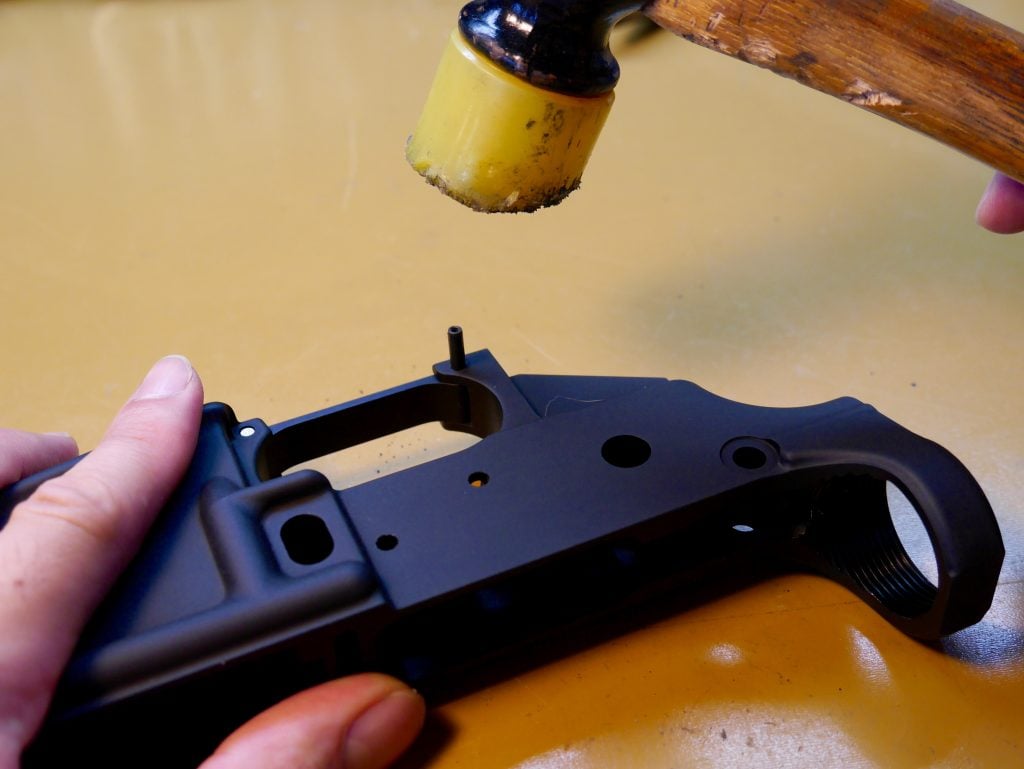
You tin either start information technology with the hammer, with a dial, or just with your fingers. I like using the hammer to go started then using the C-Clamp below.
It'due south much easier than trying to hold downwards the receiver while hammering.
Note: If y'all decide to become with just hammering…make sure yous are supporting the dog ears or else they can pop off pretty easily even on a good quality lower.
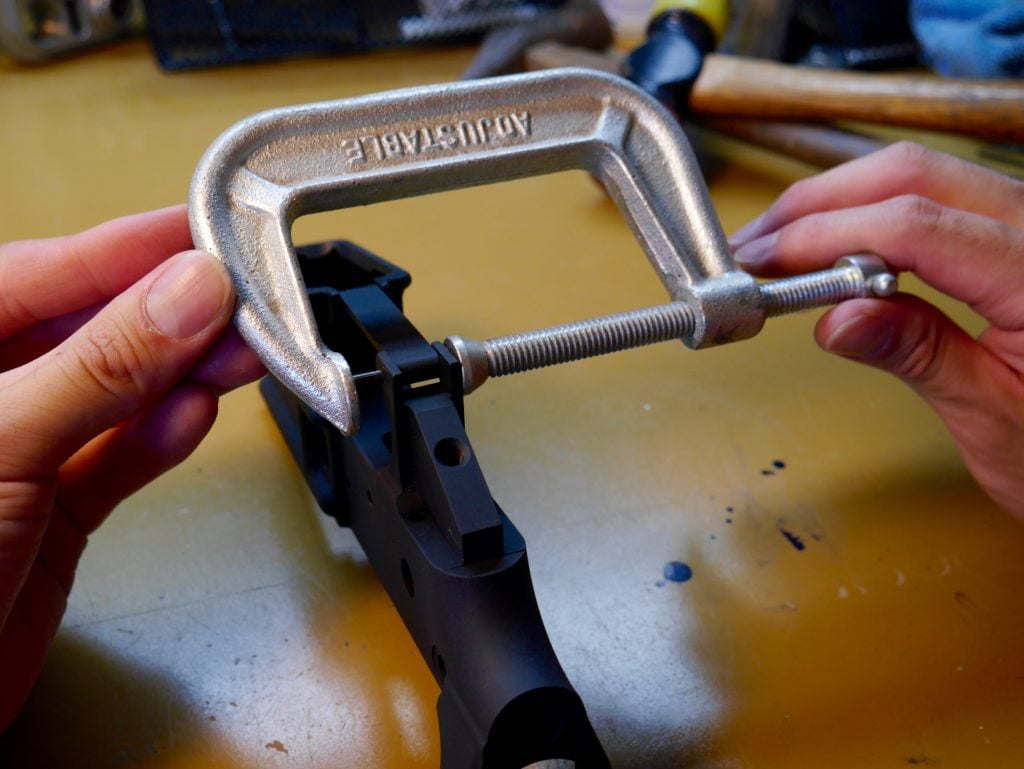
I did end up marring my terminate a petty so I would heavily suggest using some plastic. (I've heard a little slice of milk carton plastic between both sides of the clamp volition do wonders.)
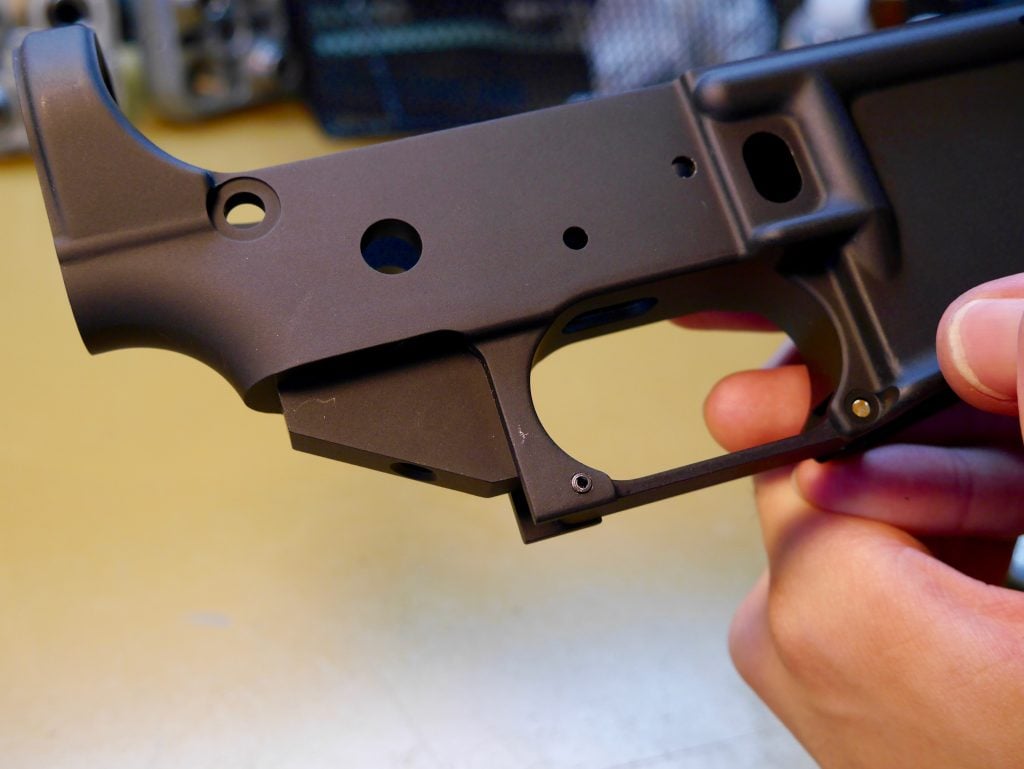
On my installed trigger baby-sit, yous can see a petty damage to the cease. But I know I'll be dealing a whole lot more damage to the receiver at the range and during competitions.
Commodities Catch Assembly
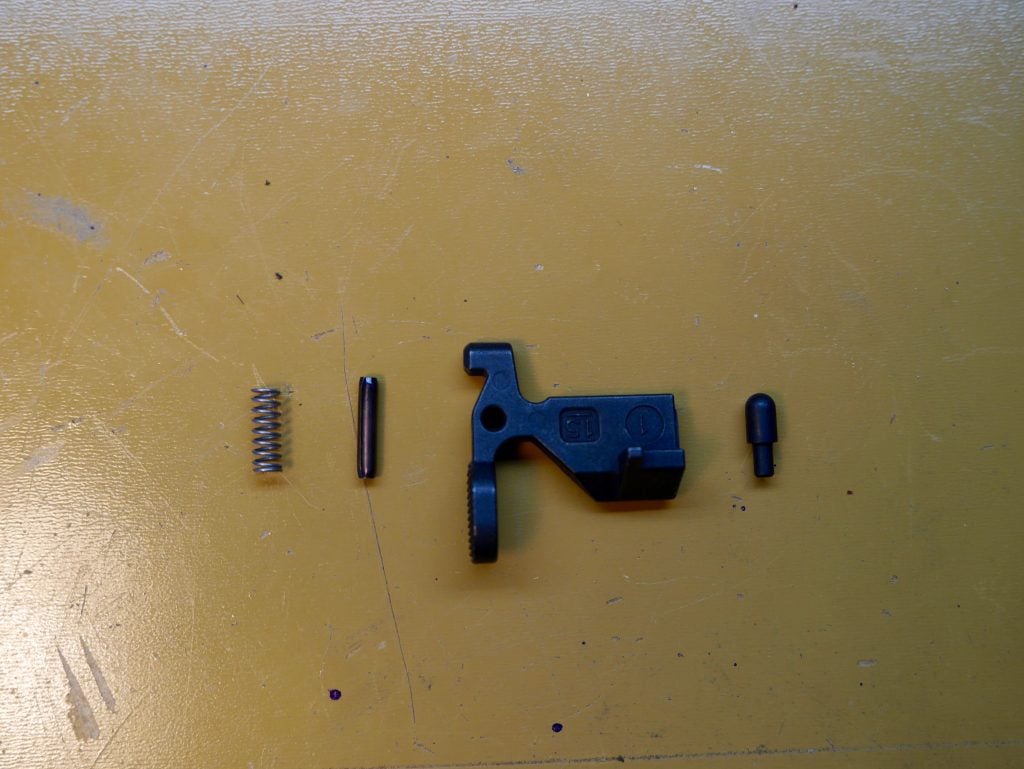
Detect these parts!
The bolt catch bound is even throughout while the other remaining smaller spring is fat on one end for the disconnector.
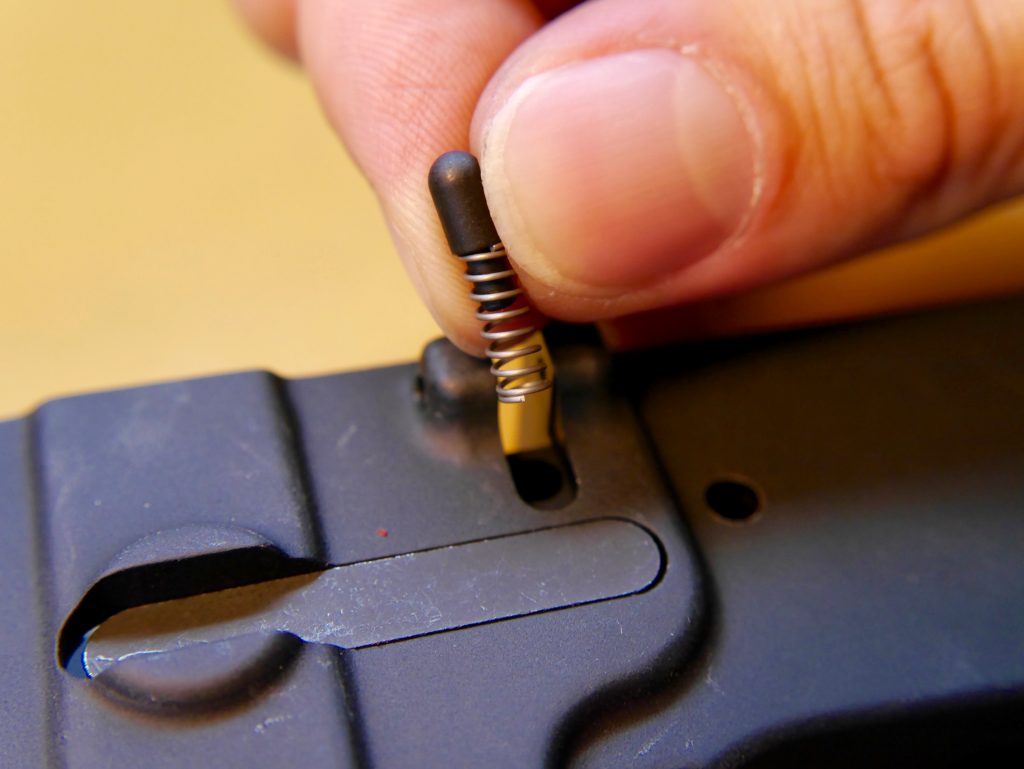
Place the spring on the plunger and driblet it into the pigsty higher up the mag latch.
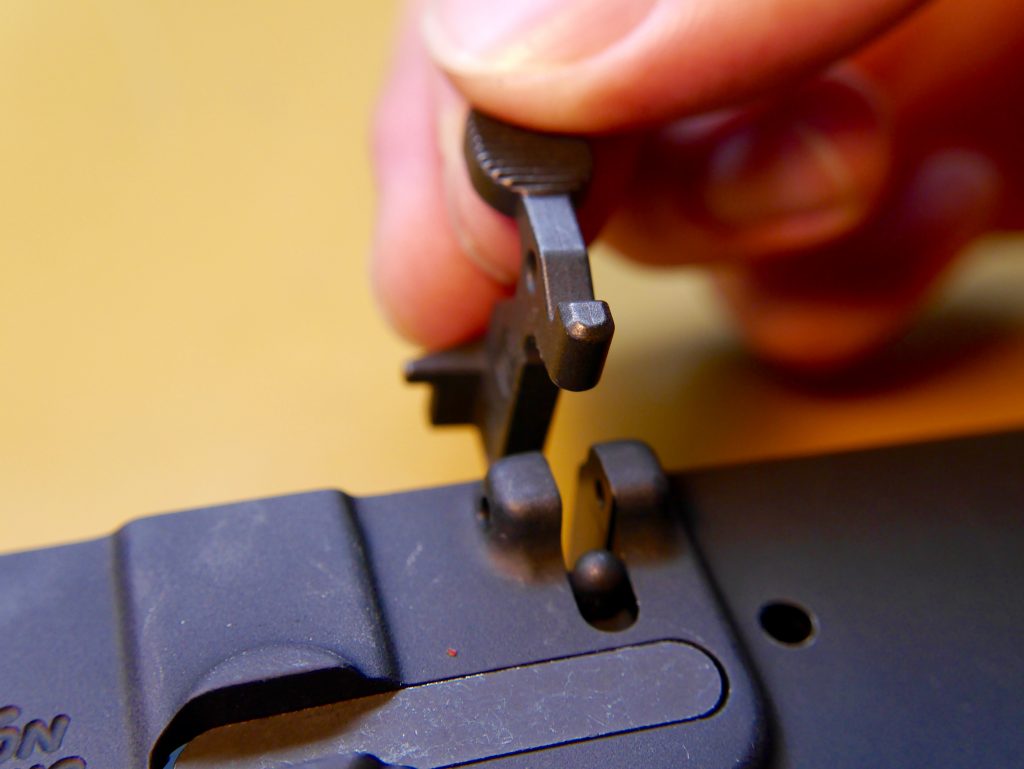
Orient the commodities catch like above and drop it downward.
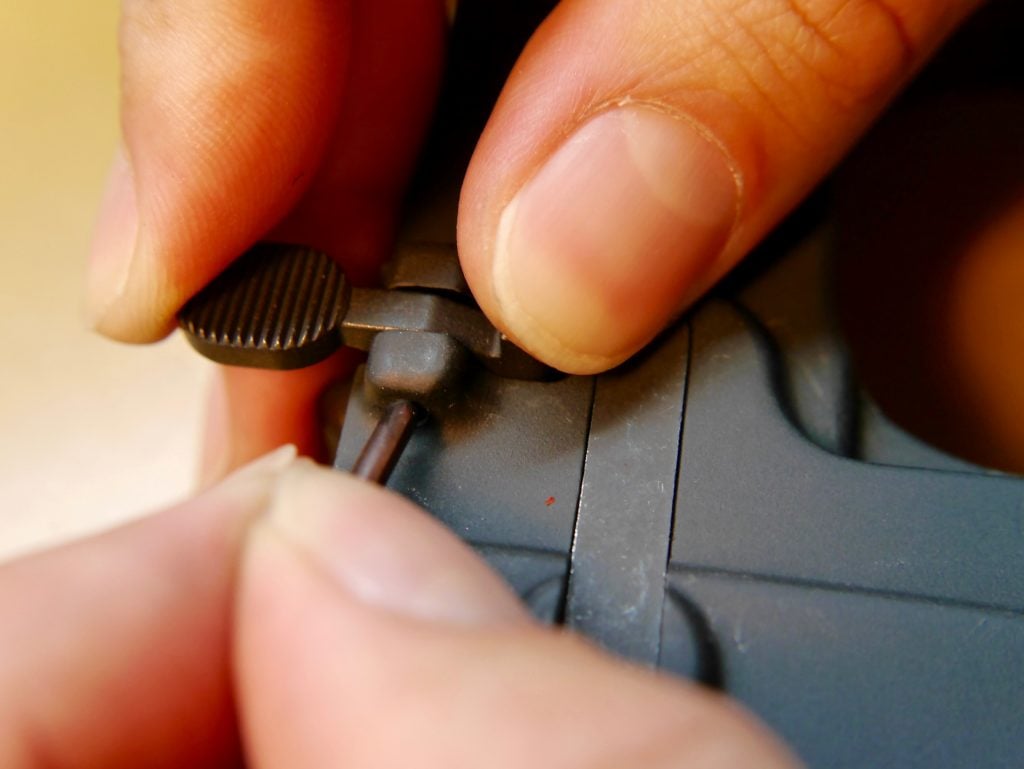
You lot volition need to depress the bolt grab for everything to line up. I like using a hammer and dial to get information technology started.
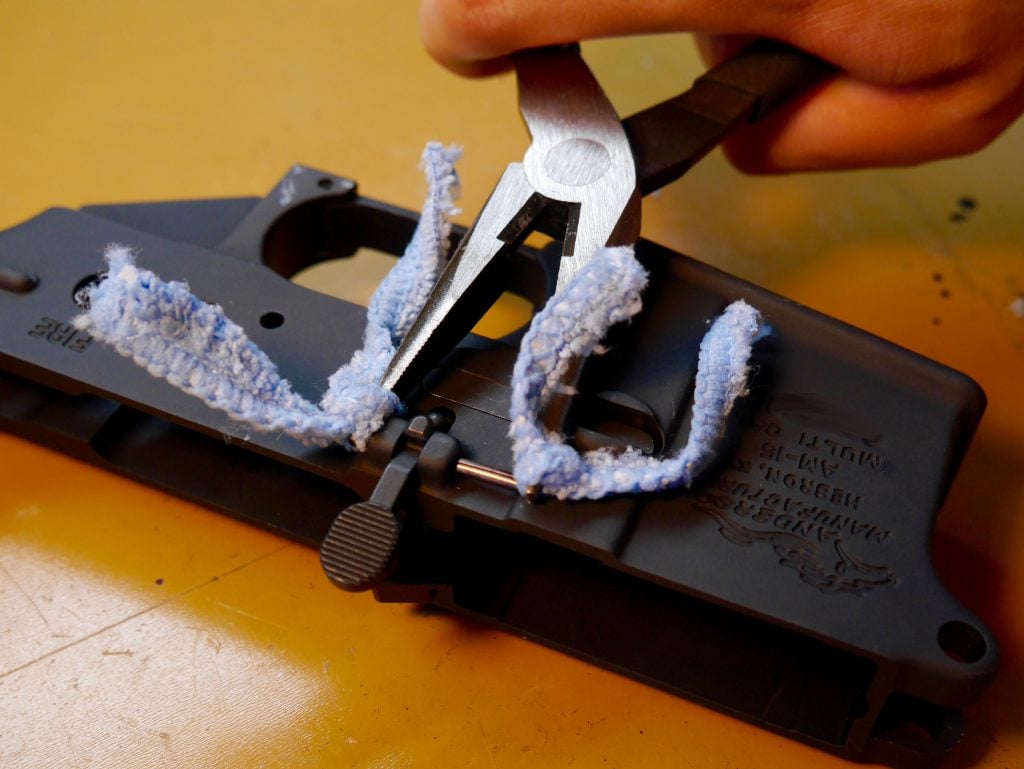
Apparently, at that place's a special tool to clench the roll pin just I decided to make my own.
Nonetheless, it wasn't protective enough so I would suggest wrapping your pliers with record first then some fabric. Or you lot tin merely continue using the punch all the style through.
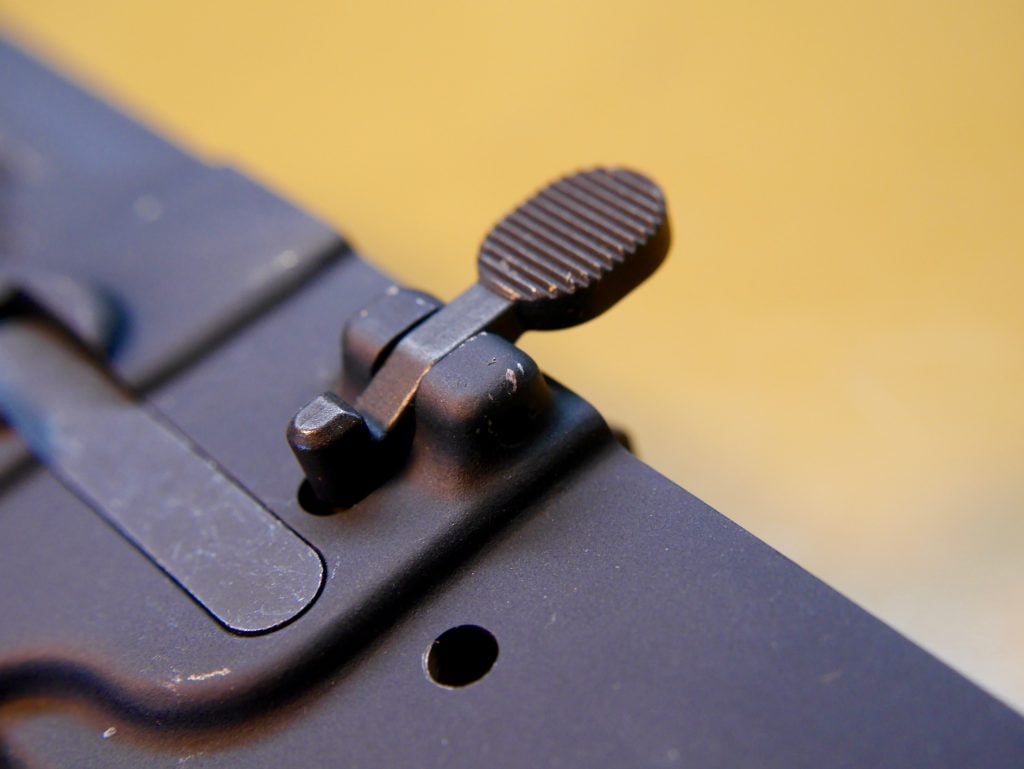
The finished bolt take hold of with only a picayune flake of marring.
That wasn't and then bad, correct? The trigger coming upward is a niggling tricky but don't worry, I got y'all!
Trigger Assembly
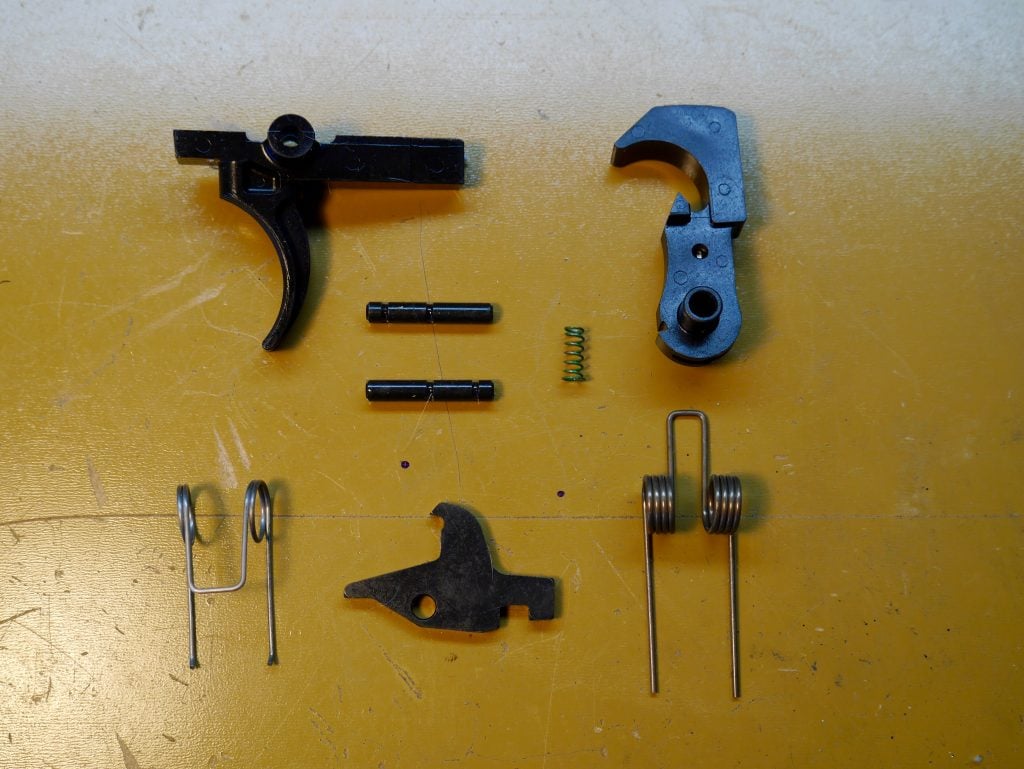
Pick out these parts from what's left.
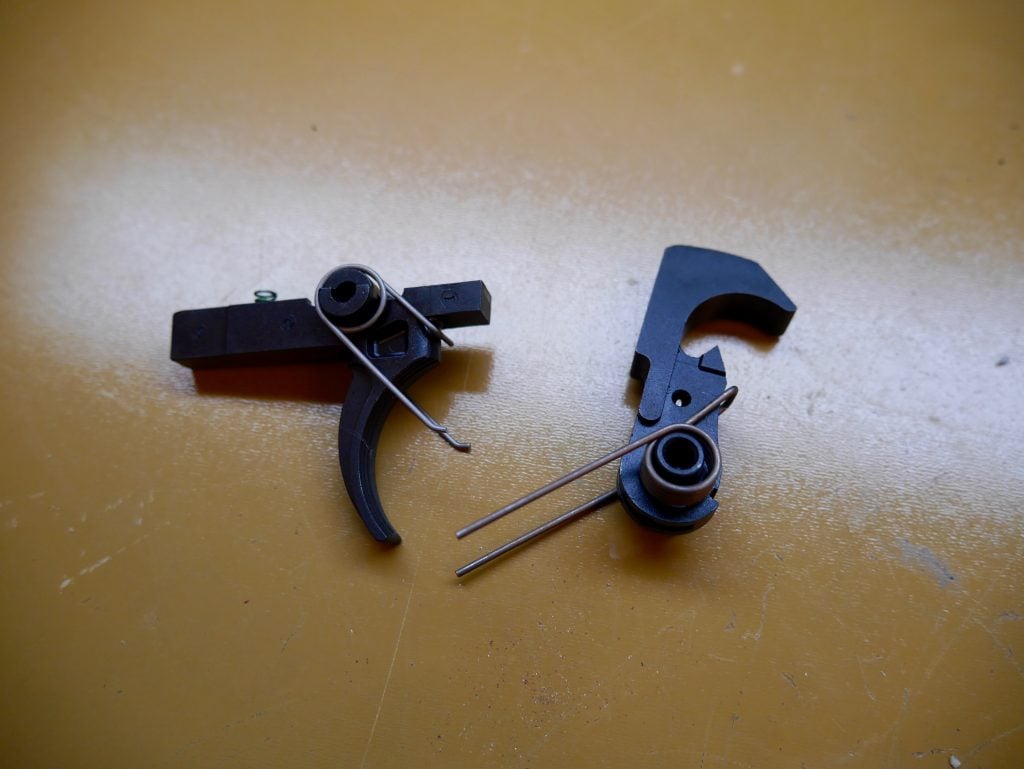
Adhere the springs according to what you lot see higher up.
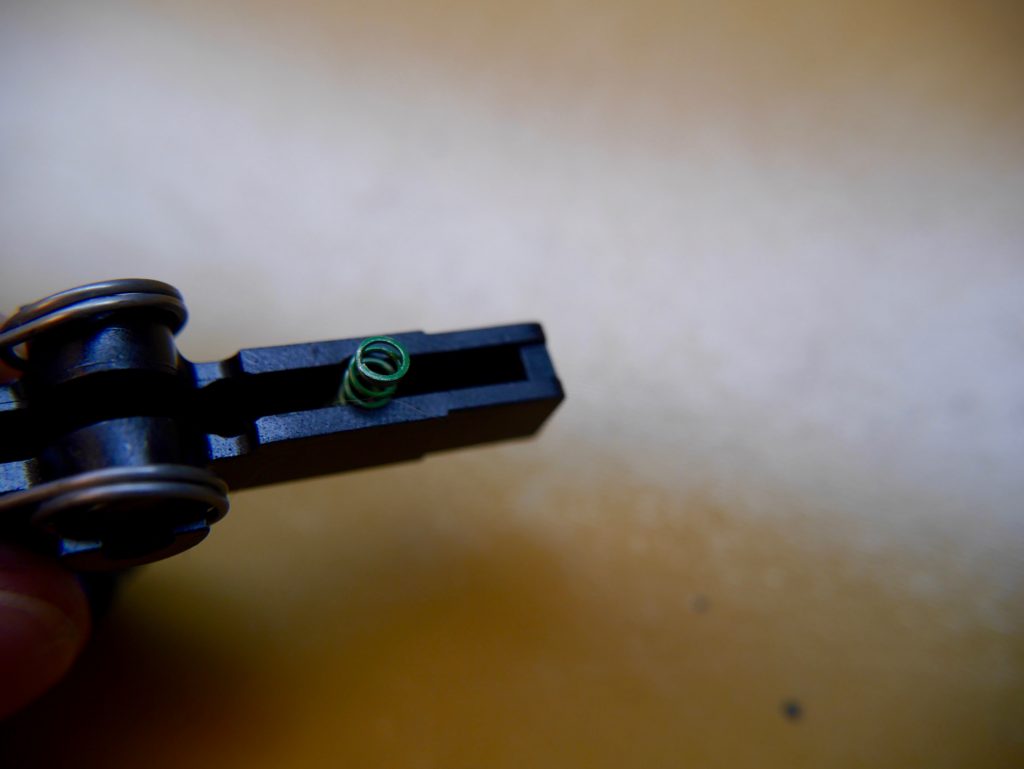
Place the fatty side downwardly into the trigger so that the bound stays put.
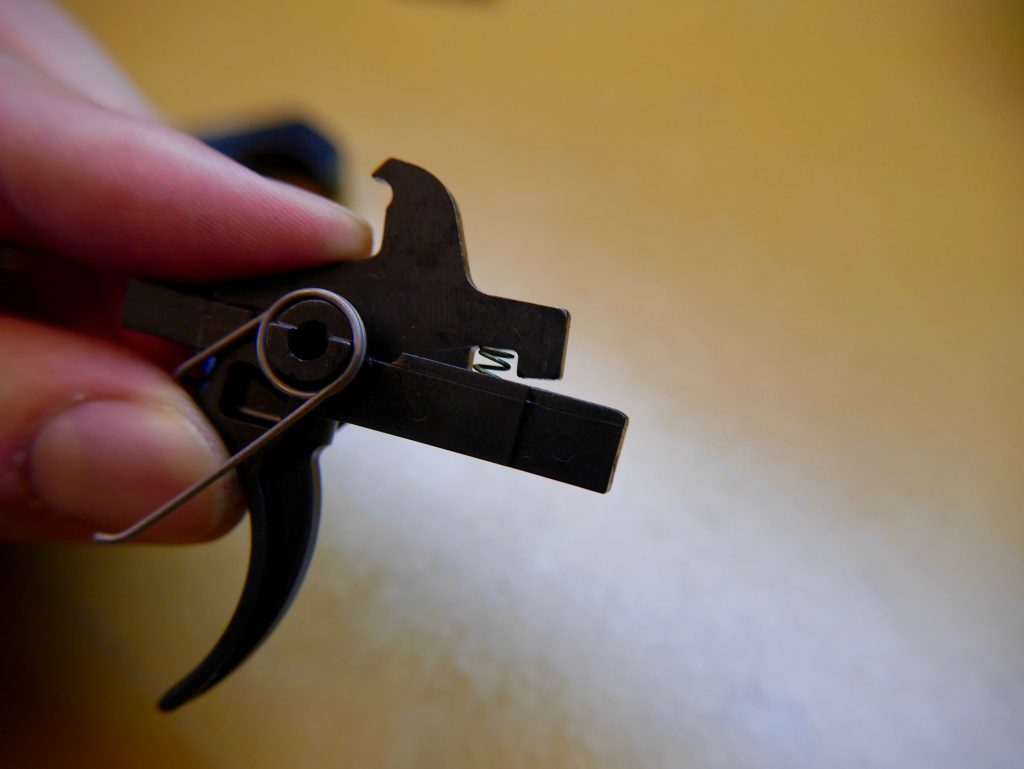
Place the disconnector onto the spring.
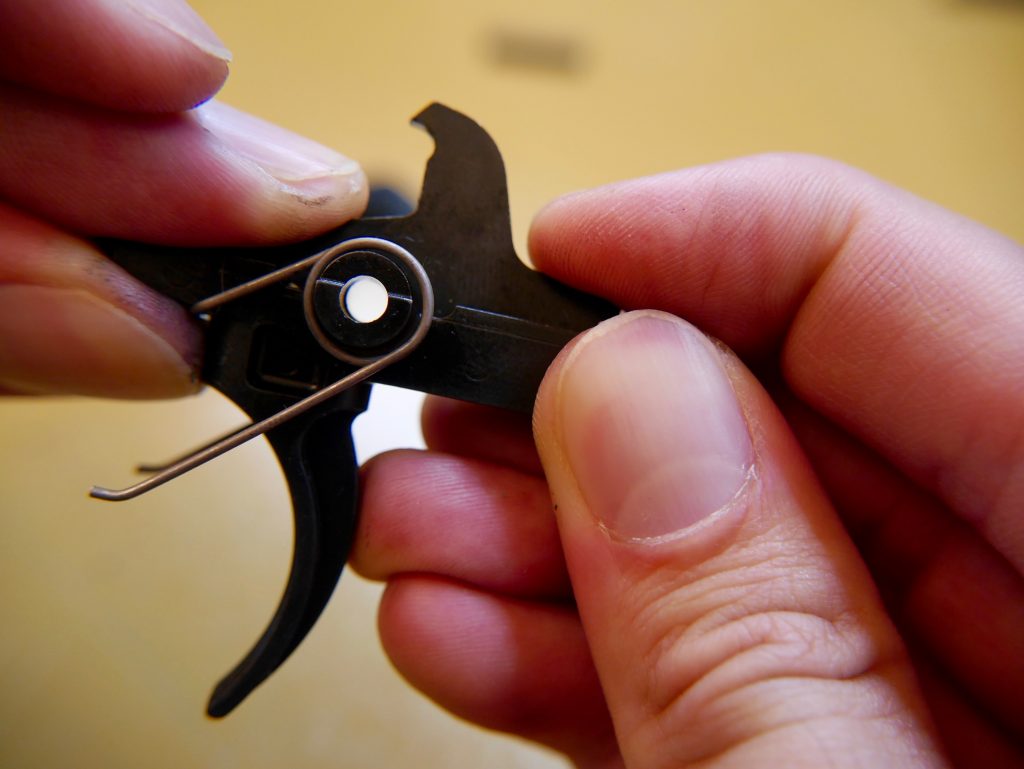
Press down on the disconnector to see the trigger hole. Yous'll exist placing this assembly into the receiver and then putting a pin through it.
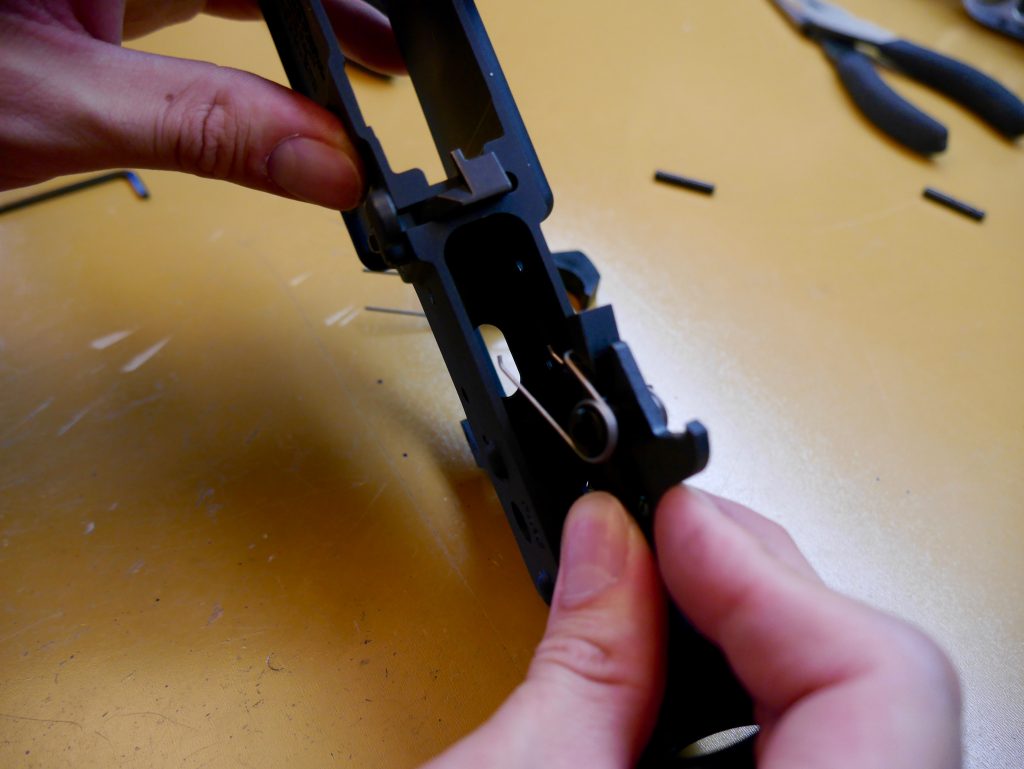
Place the assembly and so that the trigger goes through the oval bottom of the receiver.
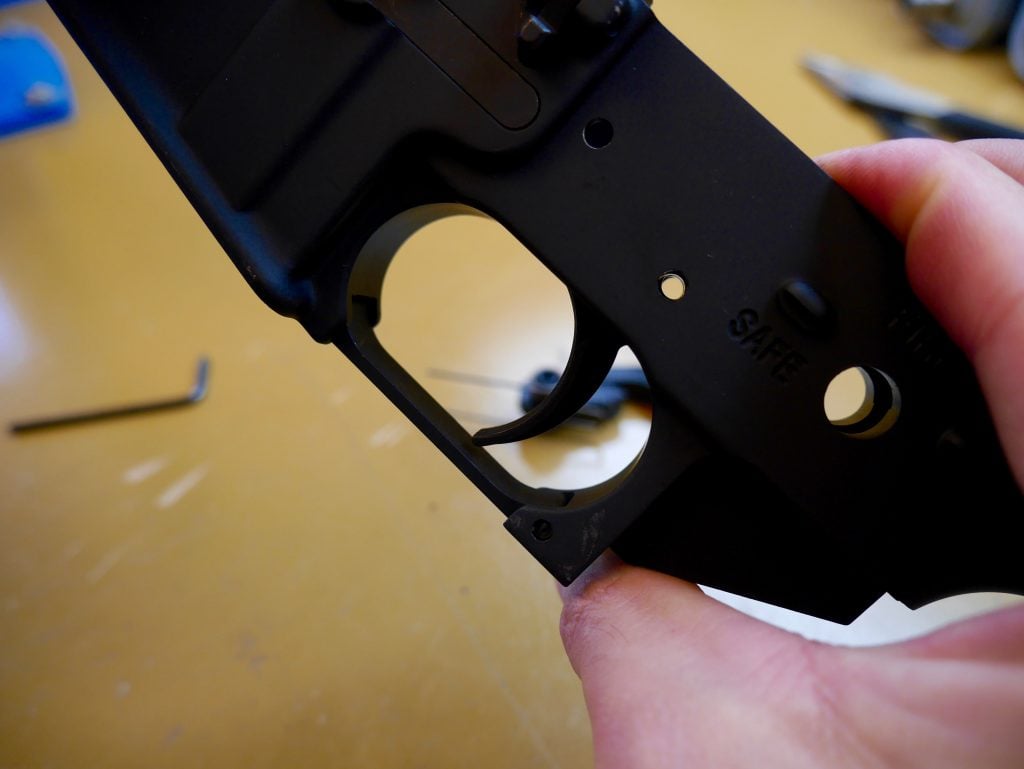
Match upwards everything and so that yous tin can see the clear hole for the pivot.
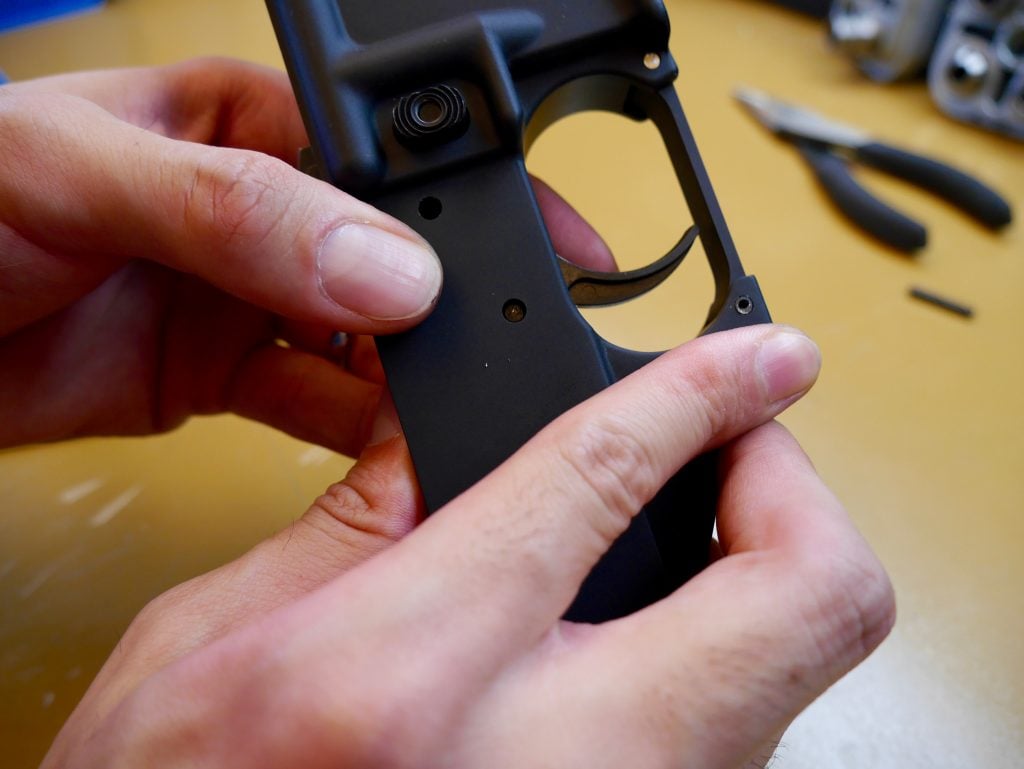
I sometimes find the trigger pin has some trouble one time it's almost through. So, I resort to using a brass punch afterwards matching information technology upward.
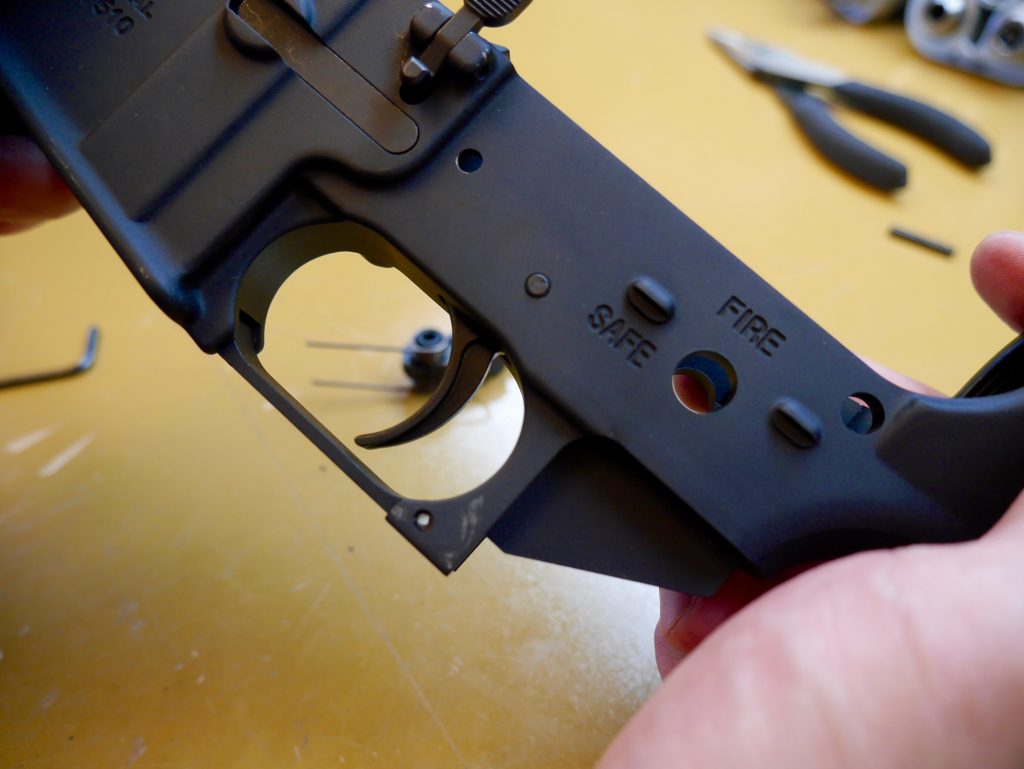
Here yous see the fully installed kickoff trigger pin.
Double-check the placement of the hammer and spring. Brand certain the springs lay on top of the first trigger pin.
They'll be decent force per unit area to align the second trigger pin hole.
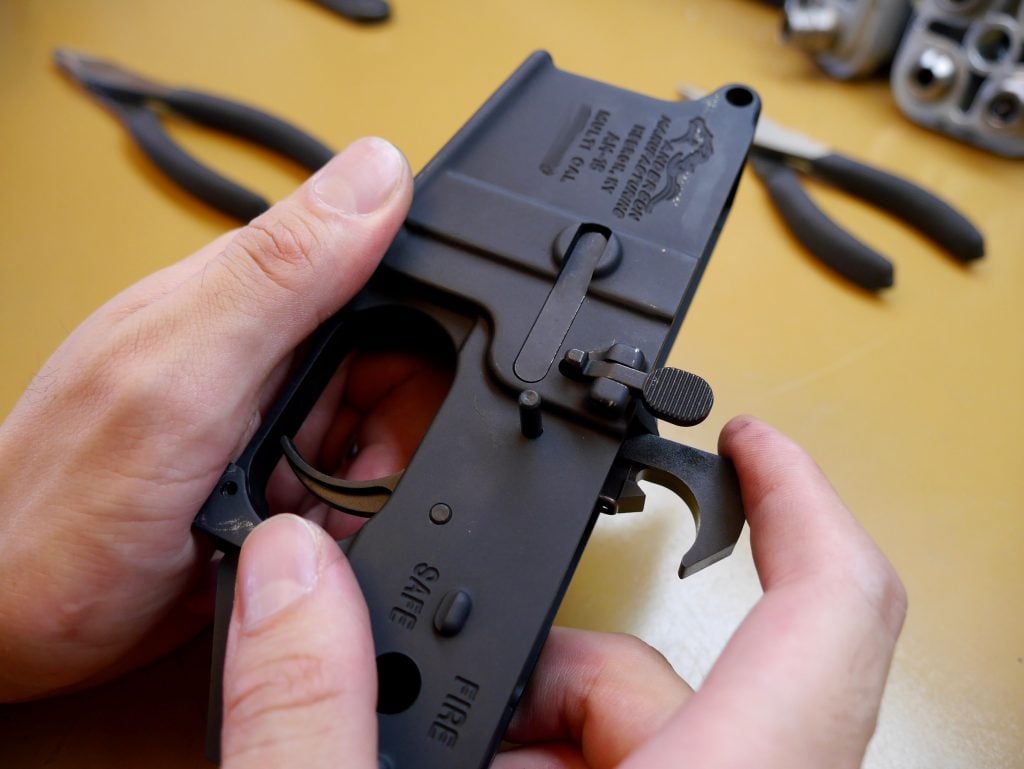
Once you get the trigger pin halfway through, I similar cocking the hammer down so that it eases the pressure a picayune bit.
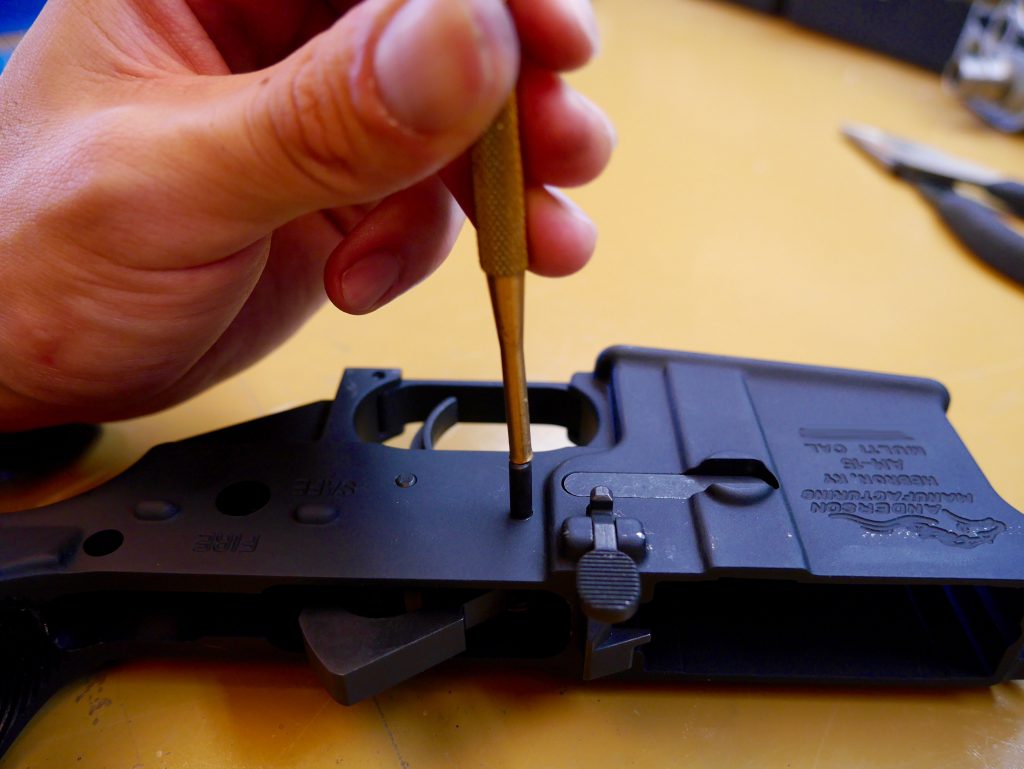
It turned out extra stiff so I used the brass dial.
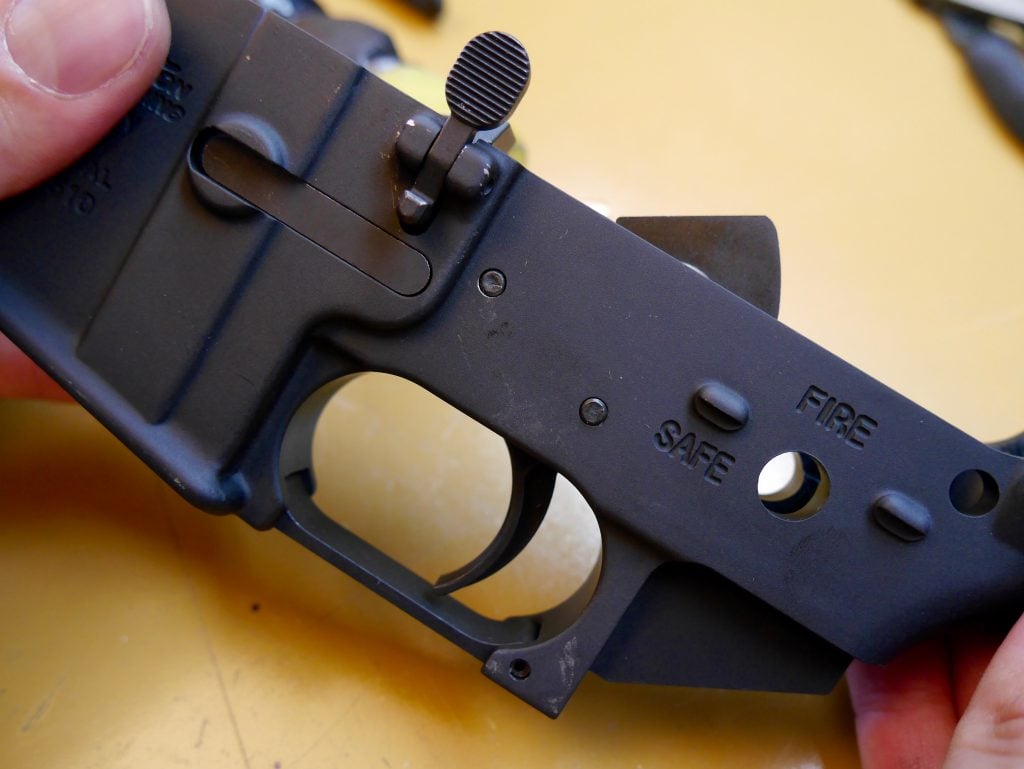
Here's the installed trigger assembly.
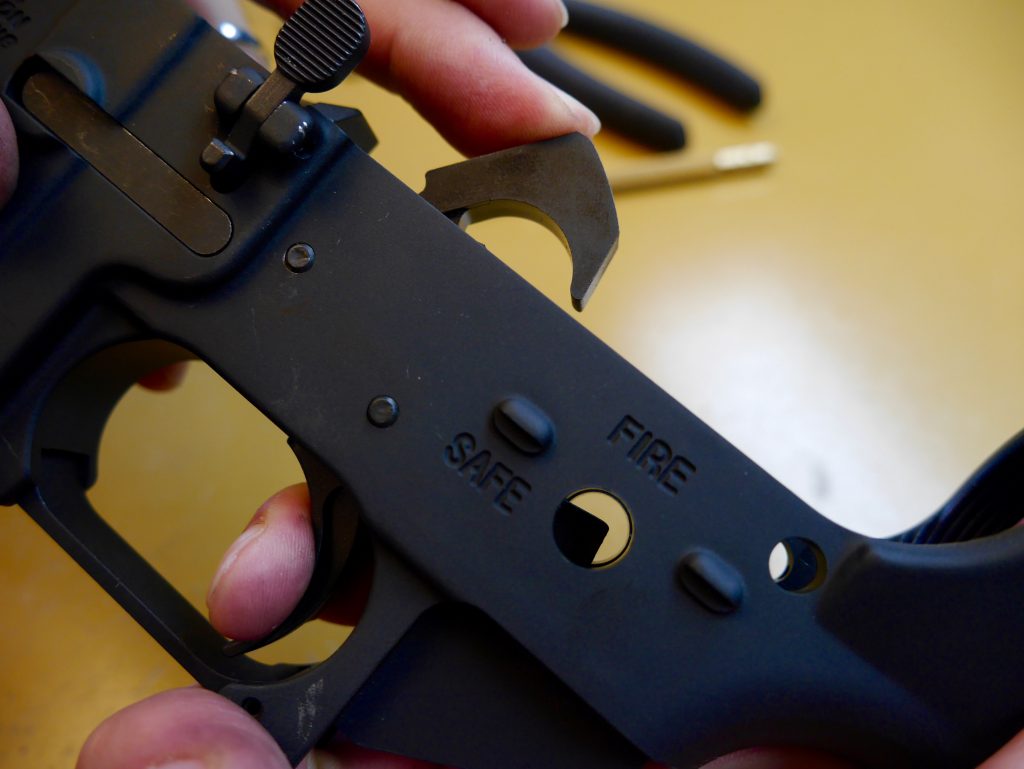
Resist the urge to dry out fire!
Doing this volition release the hammer which has zippo to hit except the lower receiver. And plenty of that will first to damage it.
I hold the hammer down with my other hand so that it slowly releases instead of slamming into the receiver wall.
And there y'all accept information technology…the trigger associates!
Rubber, Takedown Pin, Grip, & Receiver Extension
All the same with me? Nosotros're in the home stretch now.
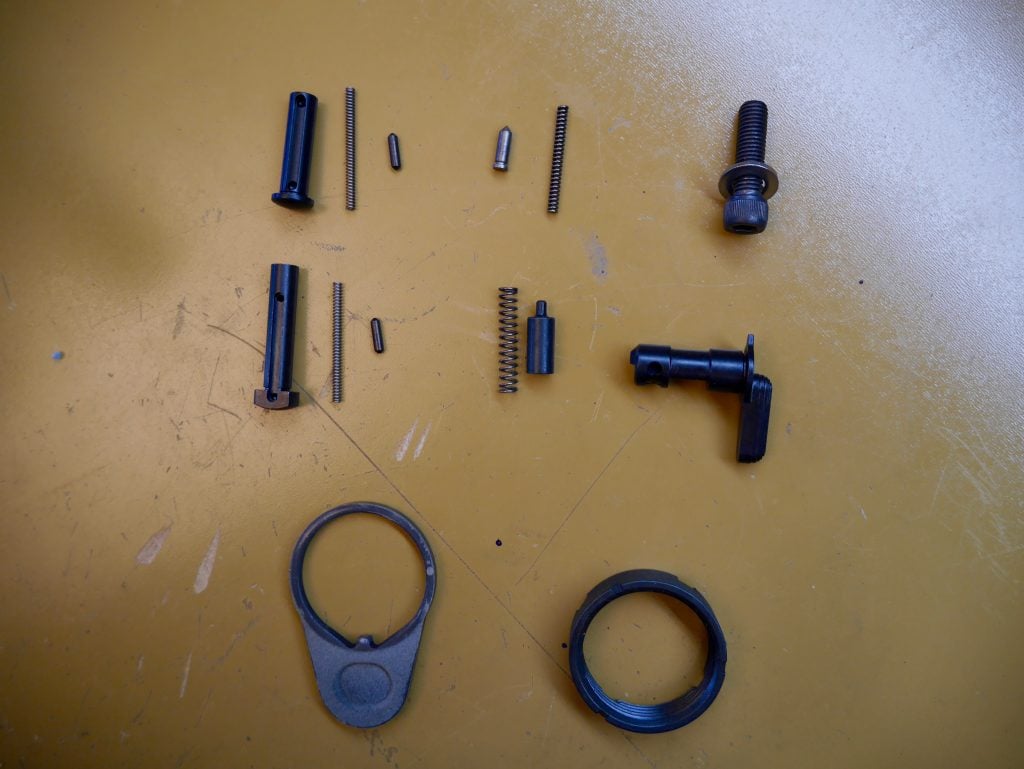
These should exist the remaining parts in your kit. Note the different sizes of springs relative to each other. The two skinnier longer ones are identical for the takedown and pivot pins.
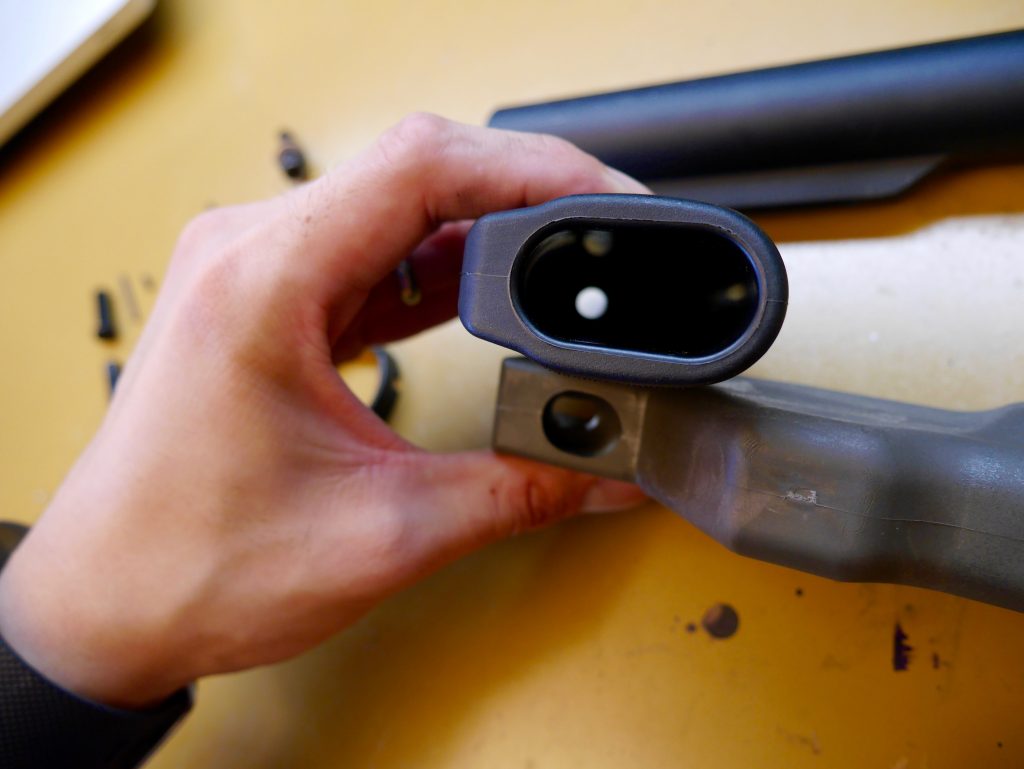
Let's offset with the grip.
The height one is a normal pistol grip while the lesser is the CA legal Hammerhead grip.
Both have holes for a screw and washer. You might just demand a longer hex primal for the pistol grip to reach all the way in.
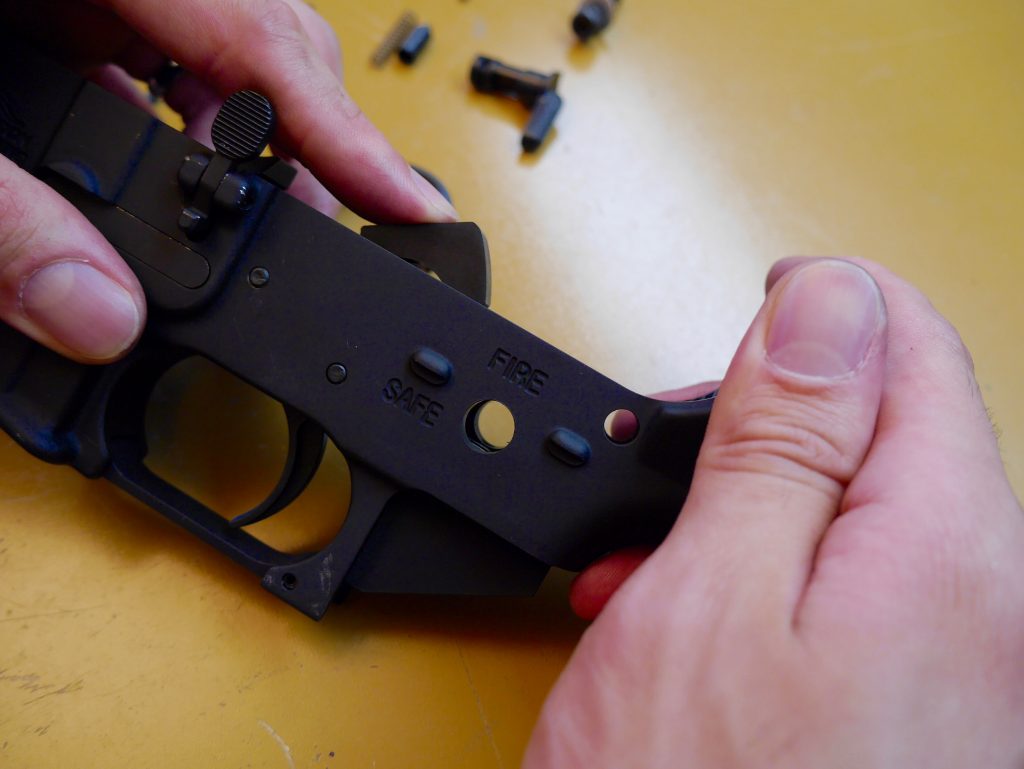
But first, let's erect the hammer back and so information technology opens up the prophylactic selector hole.
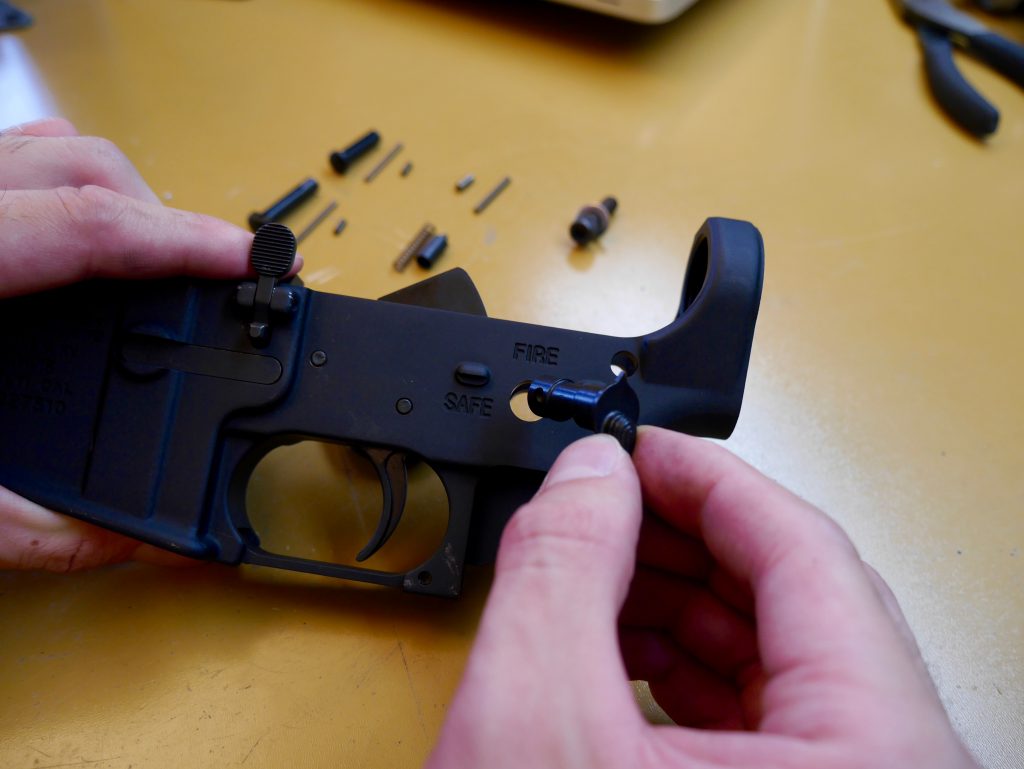
Insert the safety selector.
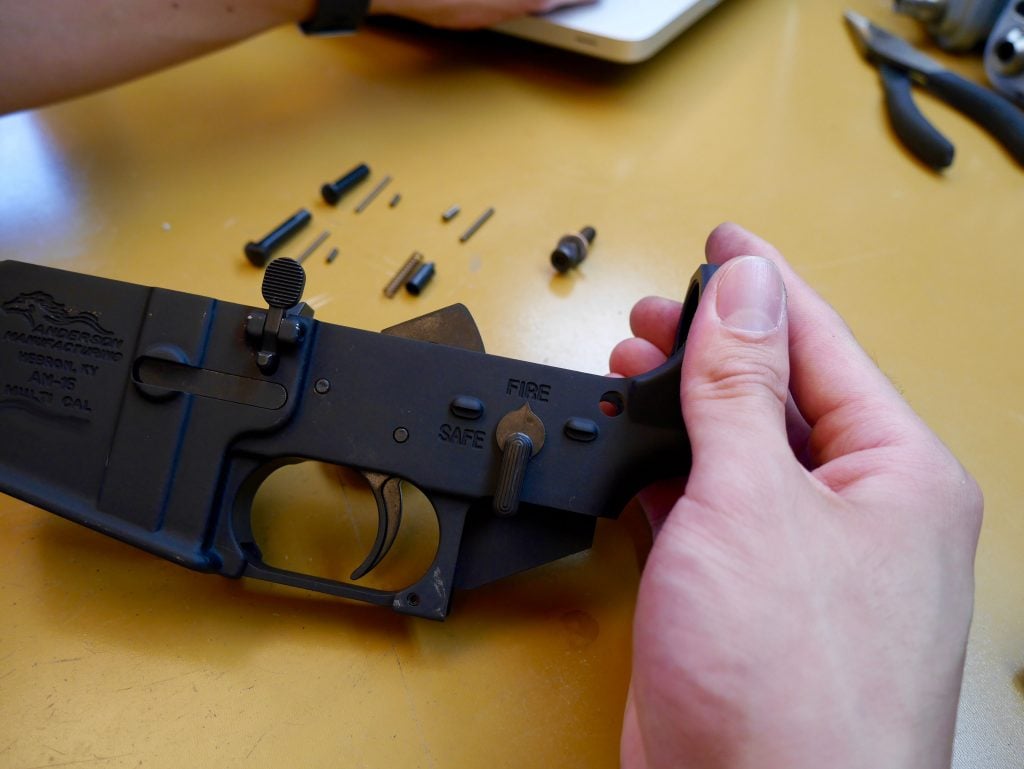
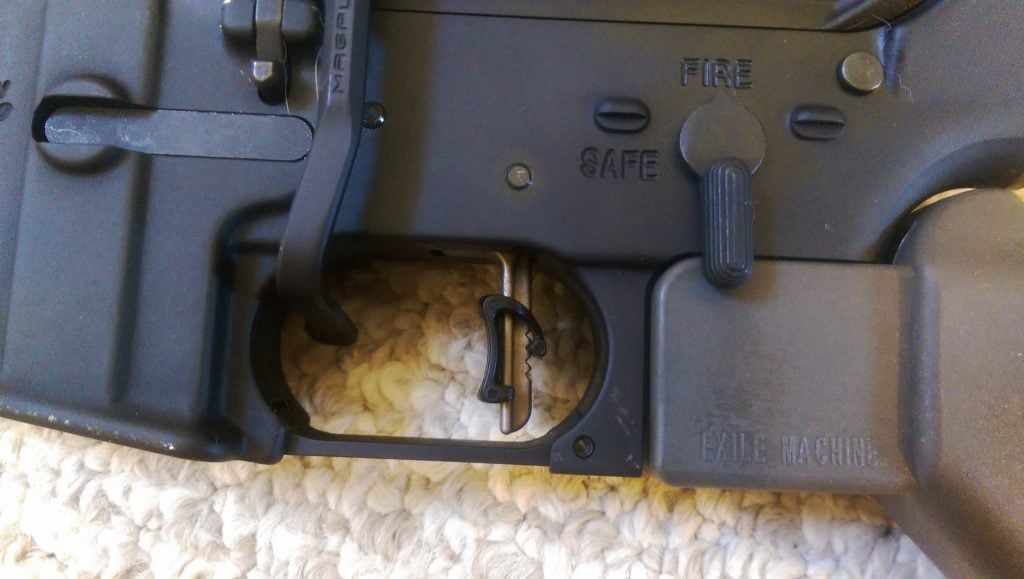
Set the position to "Fire."
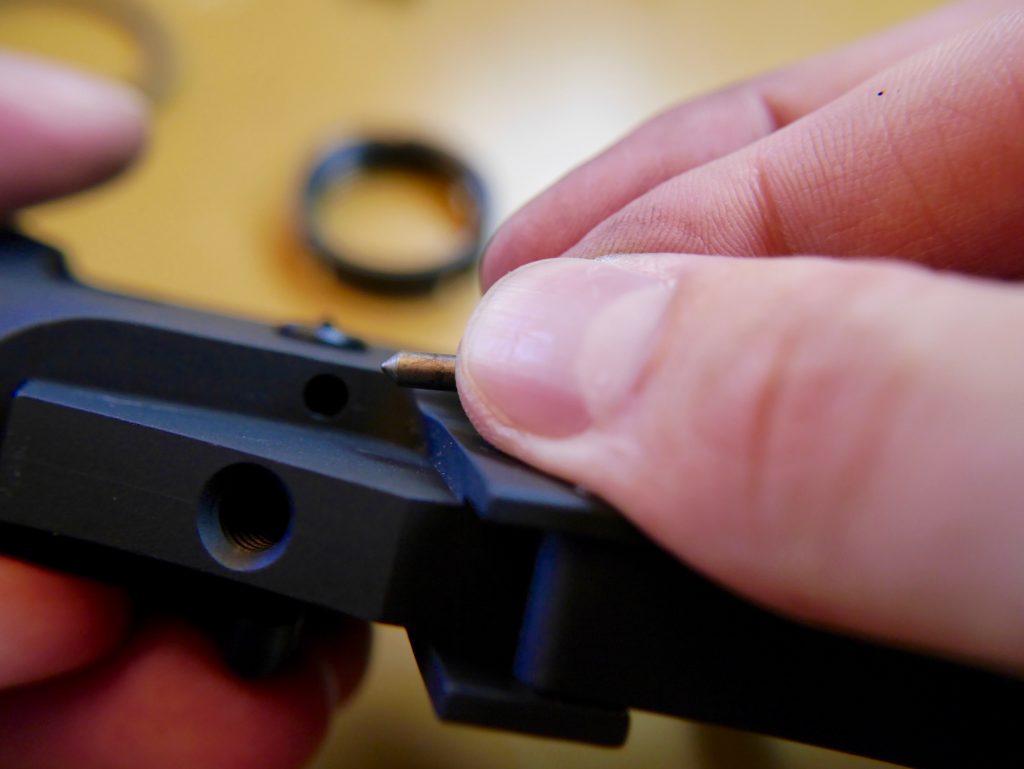
Find the rubber detent (pointed side into the receiver) and put it in the pigsty on the opposite side of the prophylactic indicator.
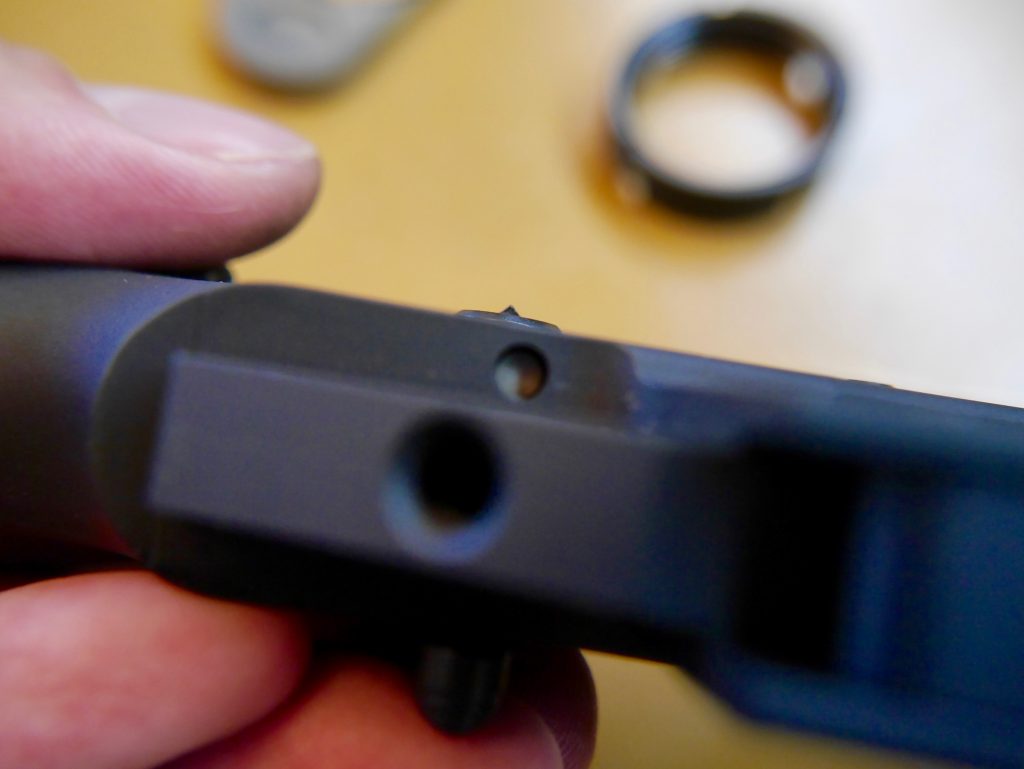
A much improve view of the silver safety detent installed.
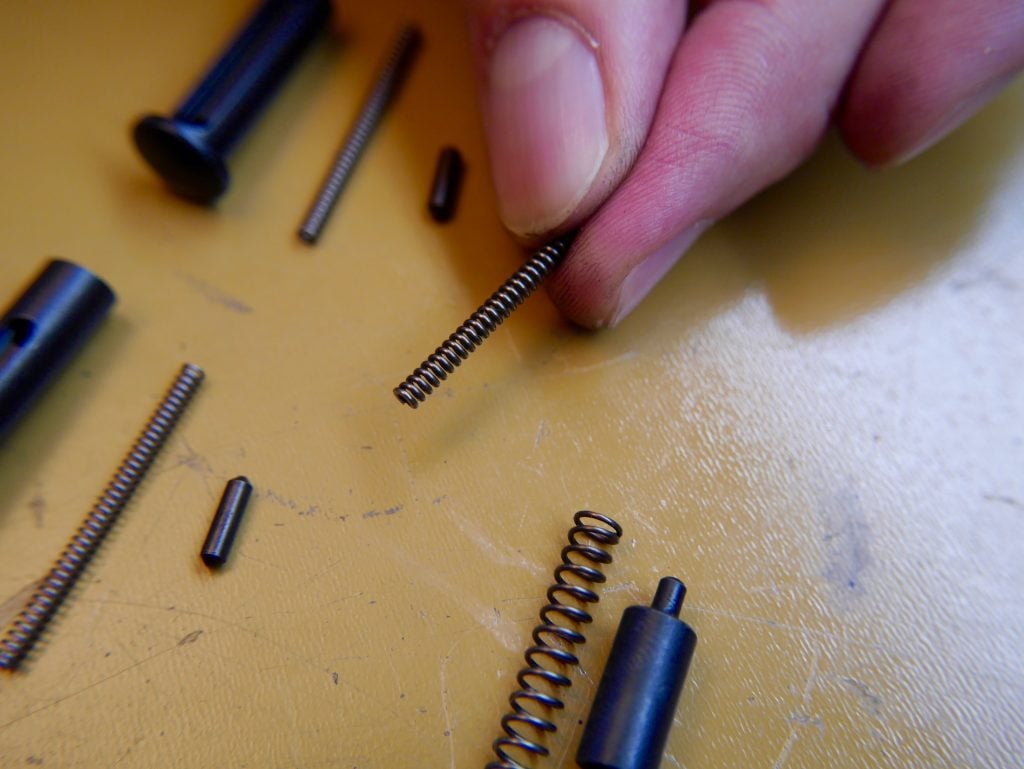
Find the safety detent spring. Information technology'south the thinner one that is slightly shorter than the other identical sparse springs.
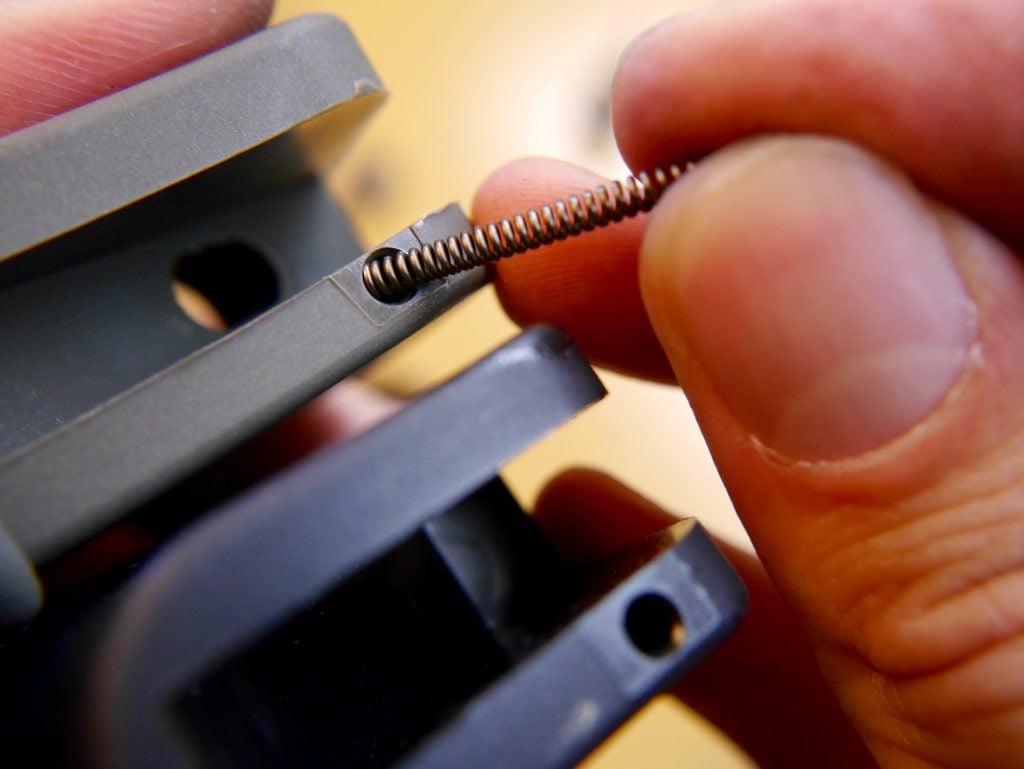
Insert information technology into the hole at the elevation of whatever grip you lot're going to use.
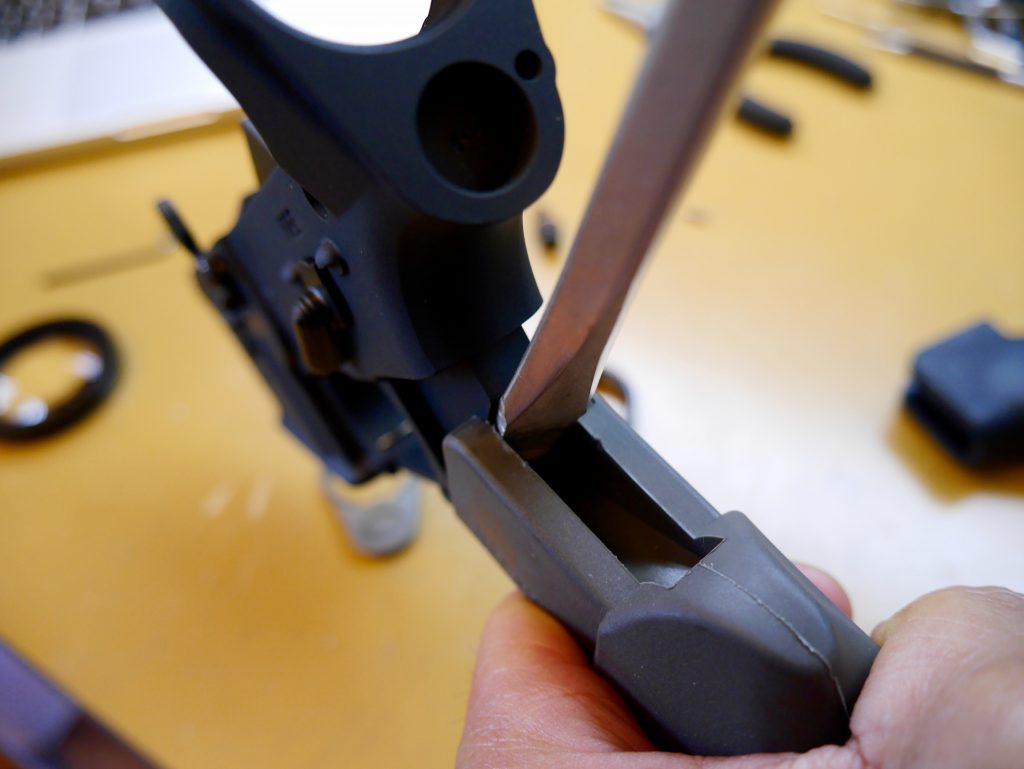
Sometimes the grip doesn't fit on hands (nor practice you lot want it to exist loose). I find that using a large flathead makes it easier to slide onto the lower receiver.
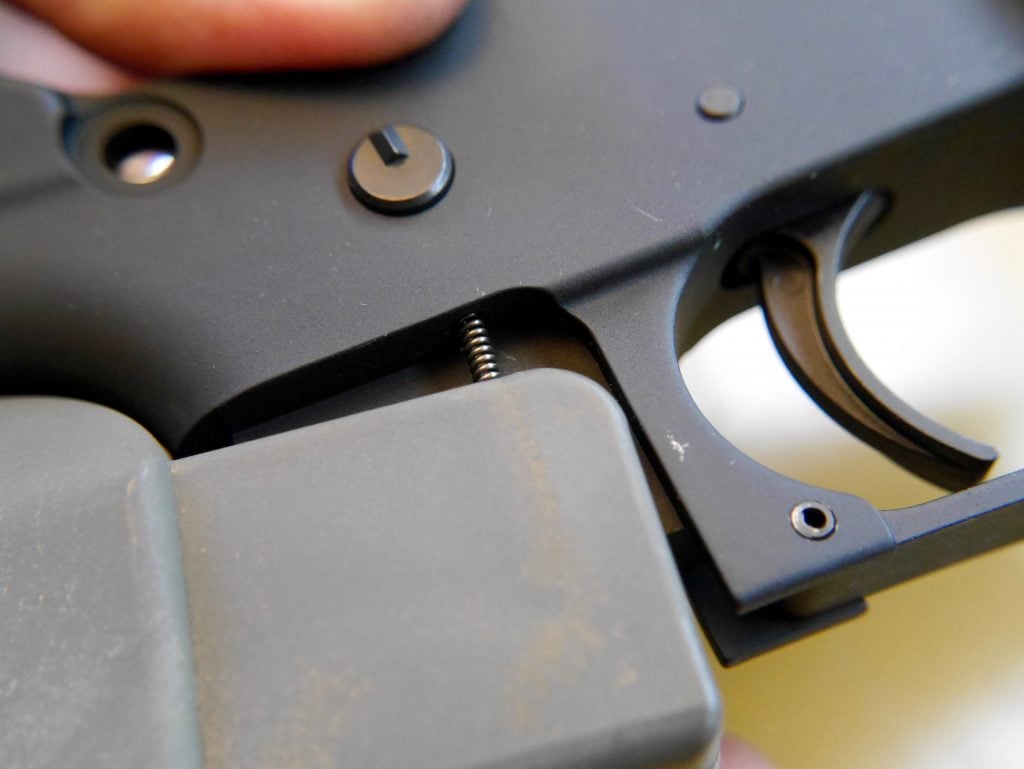
Match upwardly the bound with the safety selector pigsty and double-bank check that the safety selector is withal in the "Fire" position on the opposite side.
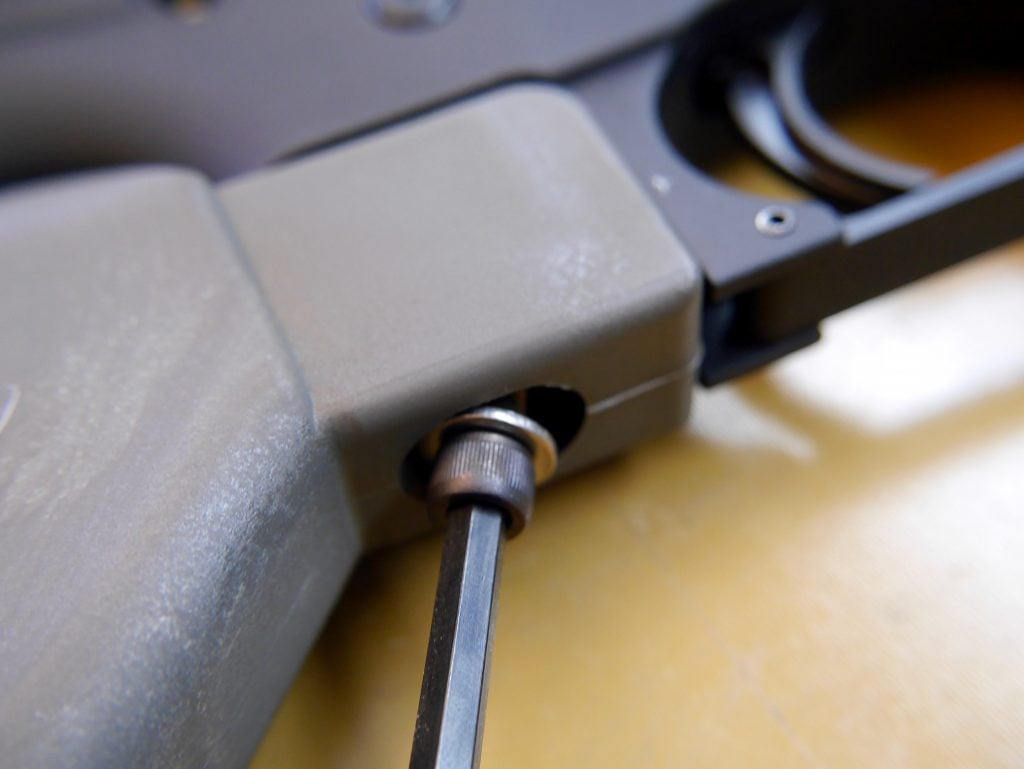
Screw in the grip with the enclosed hex nut and washer.
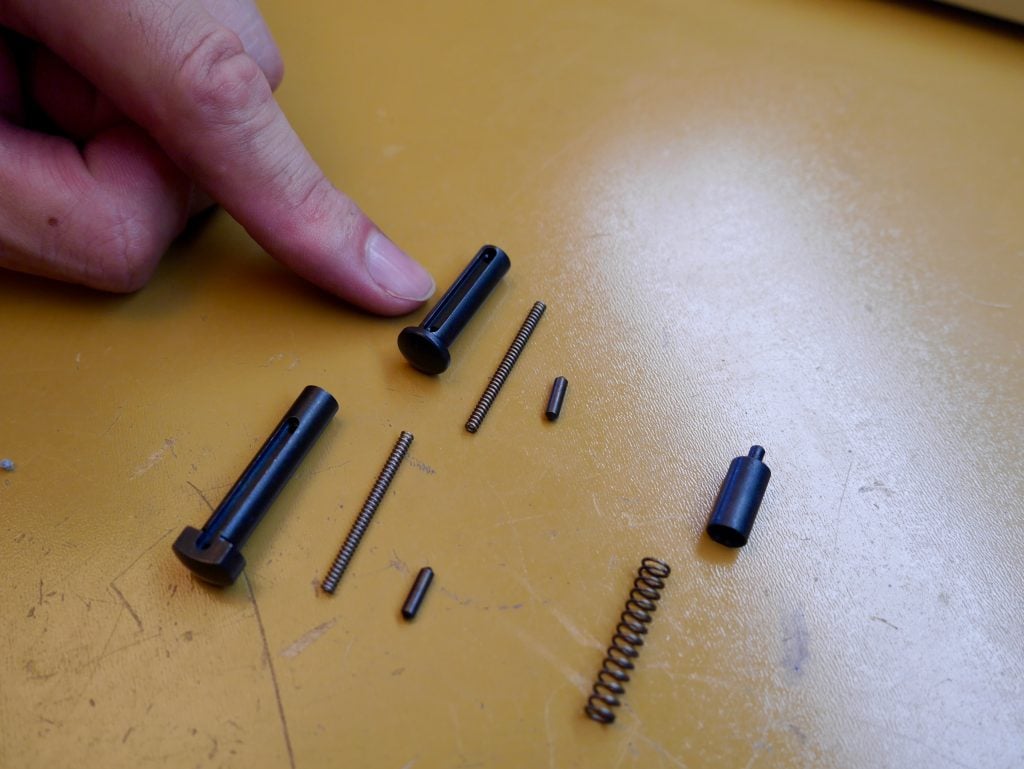
Expect for the shorter pin (rear takedown pivot) which will have an identical spring and detent to the longer pin (pivot pin).
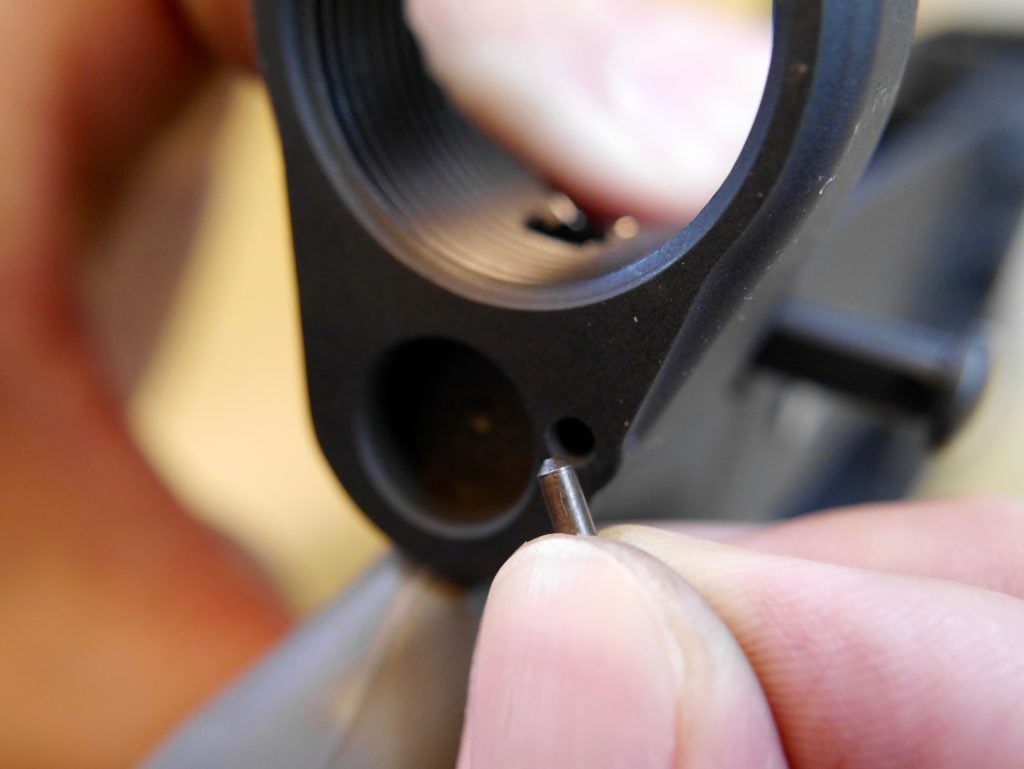
Install the rear takedown pin from the left to right (shown fuzzily, sorry!) and besides place the detent in the dorsum of the receiver.
It helps to orient the takedown pin so its "channel" volition accept the detent.
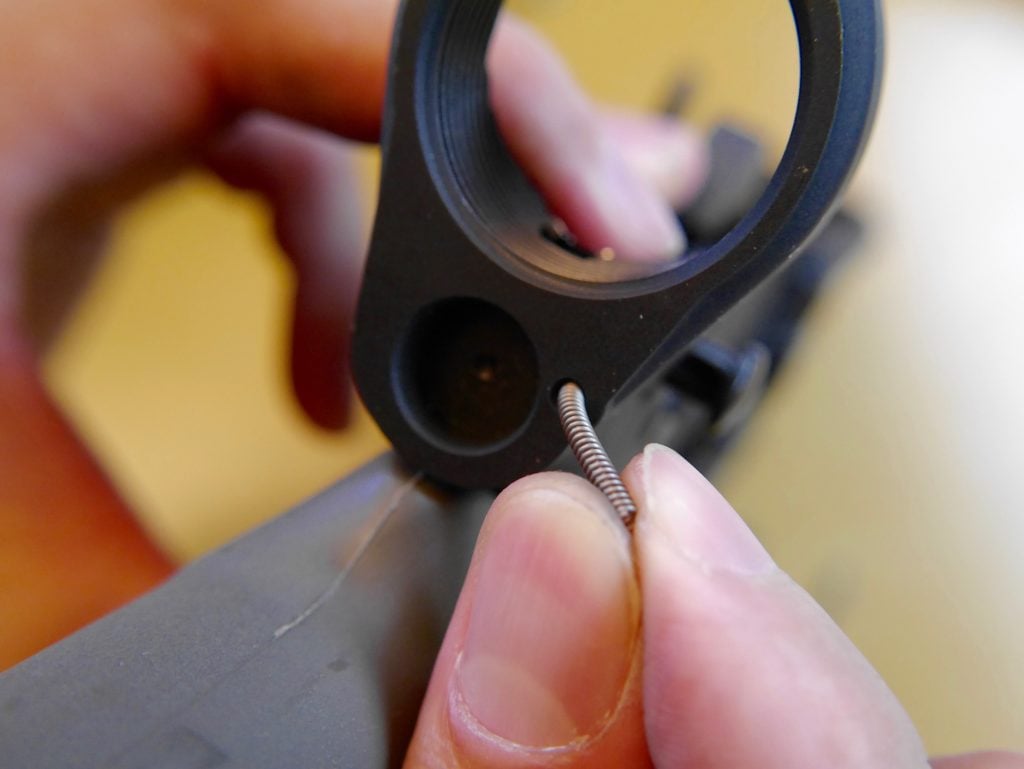
Insert the detent leap.
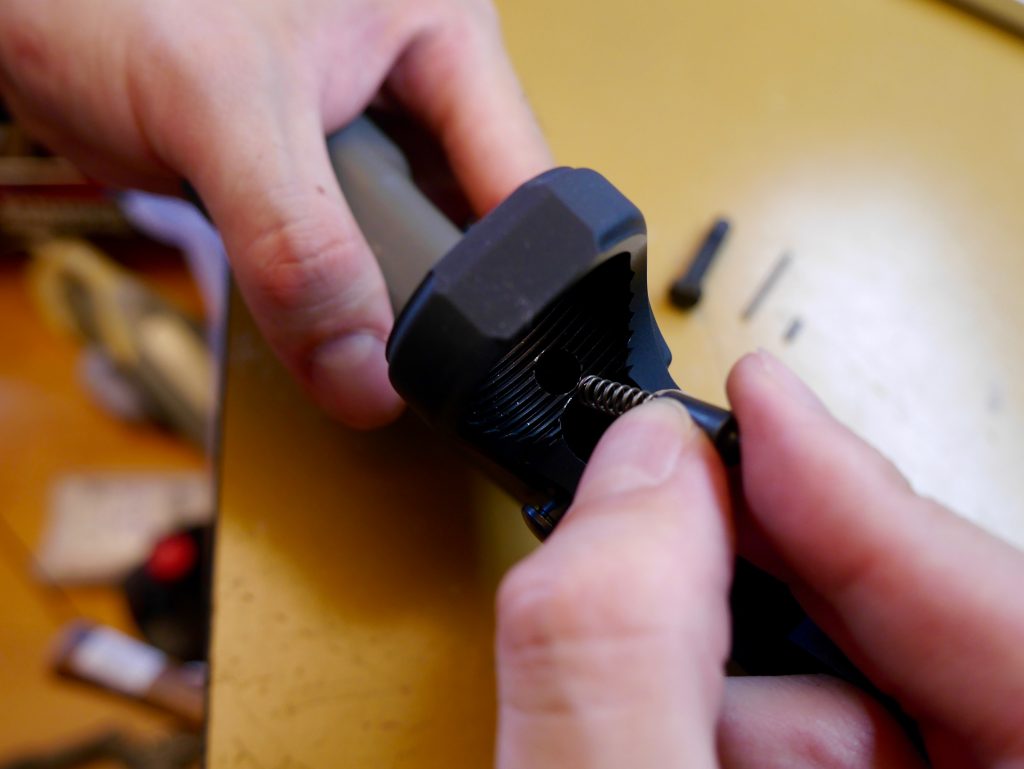
Now discover the buffer retainer and leap (thickest one left) and place them in the hole above.
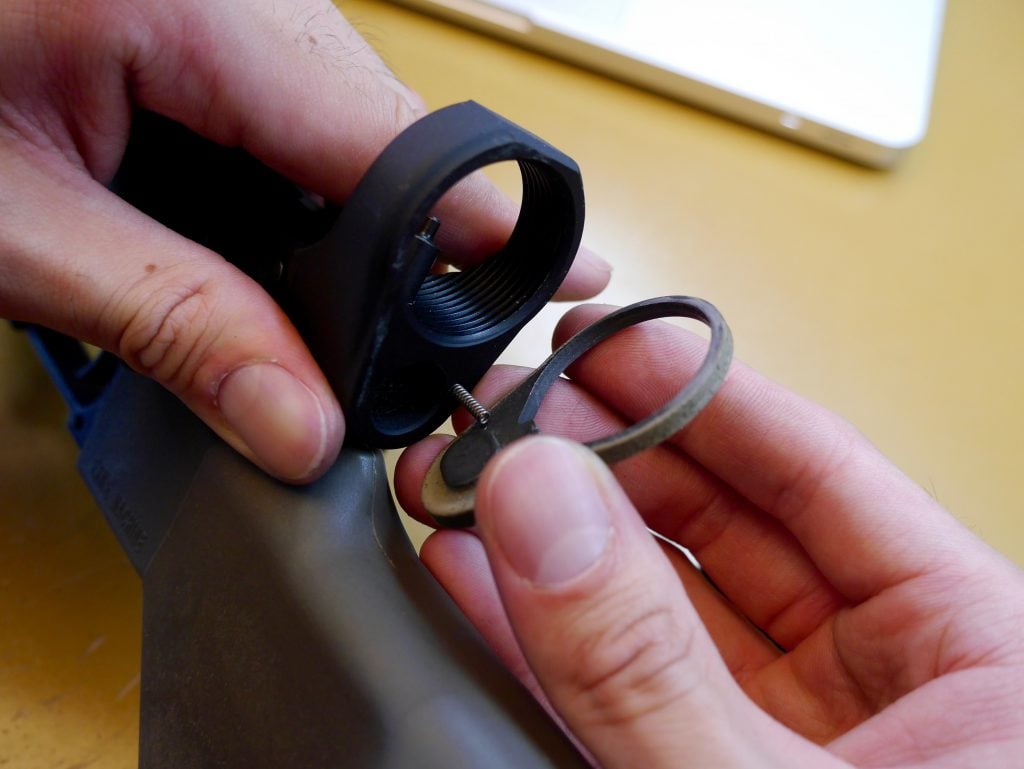
Also, take a look at your end place where one side has protrusions that will fit nicely with the back of the receiver.
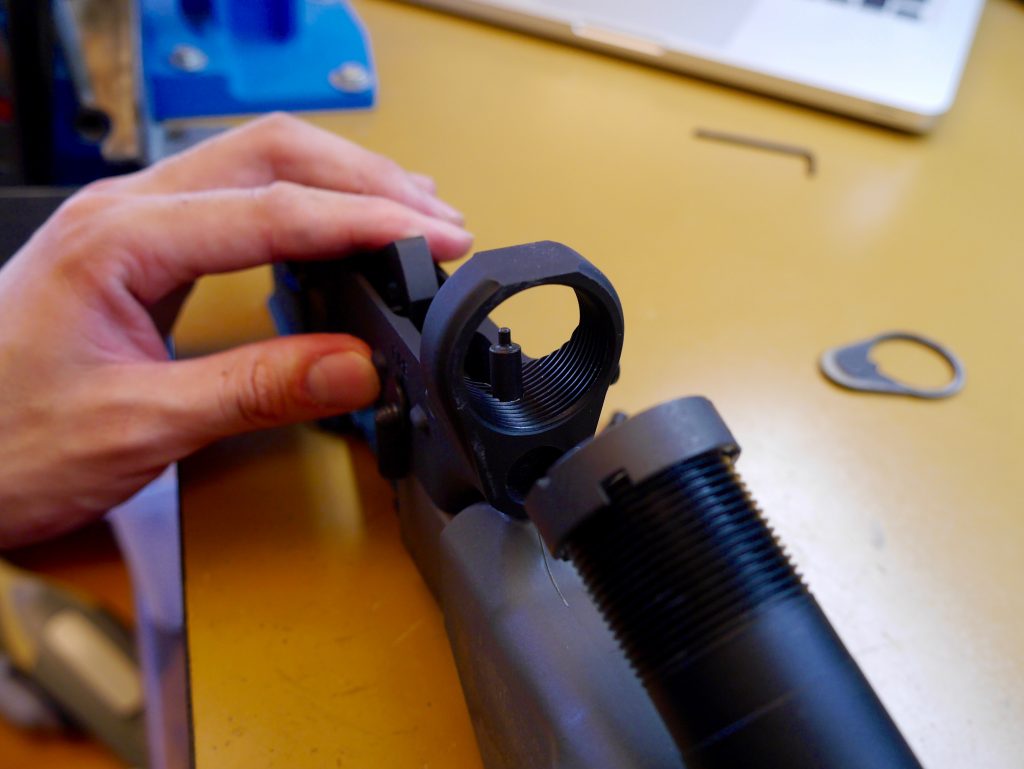
But first, spiral on the castle nut in the position above. With the bigger square cuts toward the back of the lower receiver.
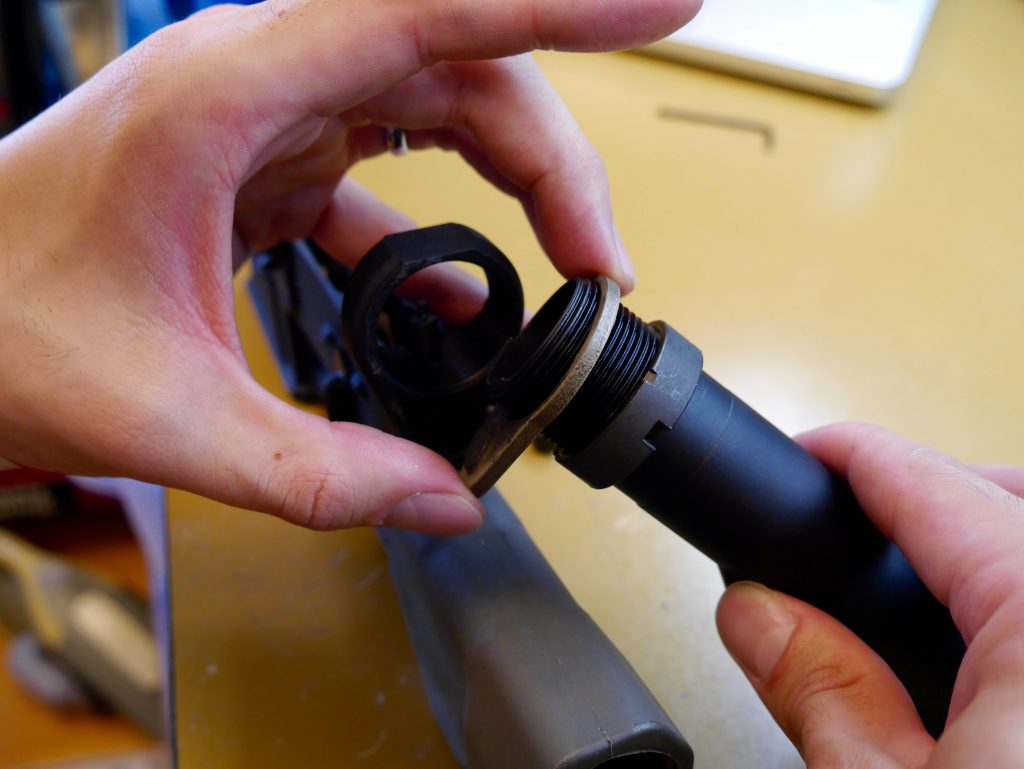
Then put on the end plate in the correct orientation. I've definitely done this in the incorrect society, then delight larn from my fails!
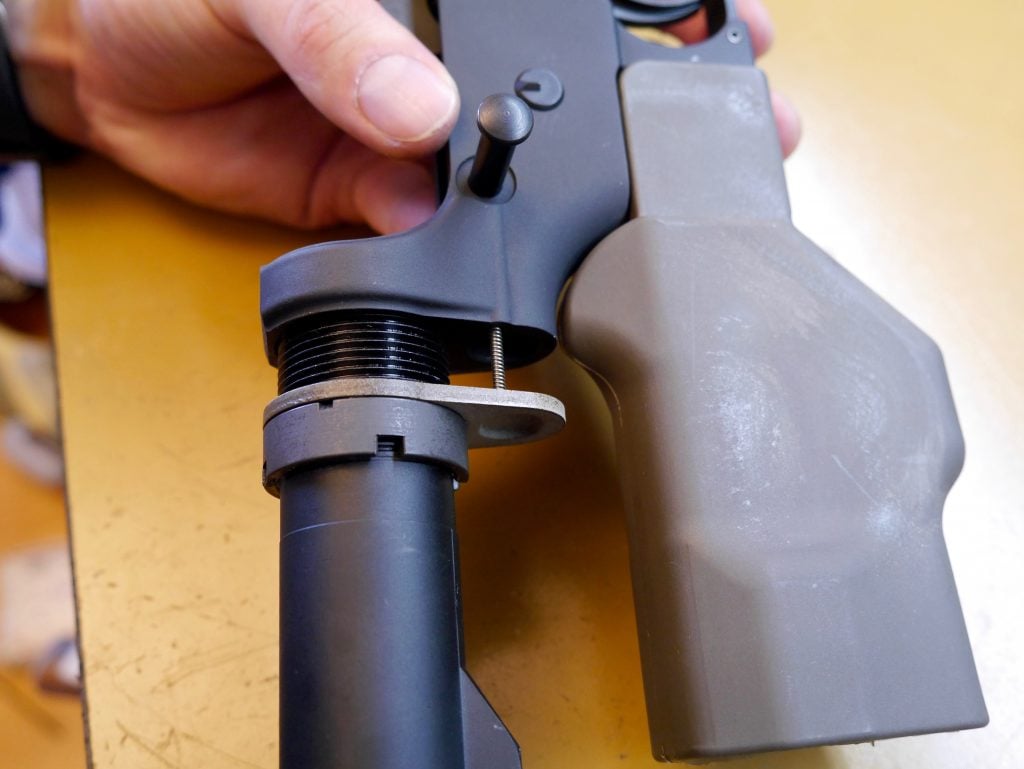
Start screwing in the buffer tube. The finish plate will move with each turn and start messing with the spring.
Attempt your all-time to not allow it come out.
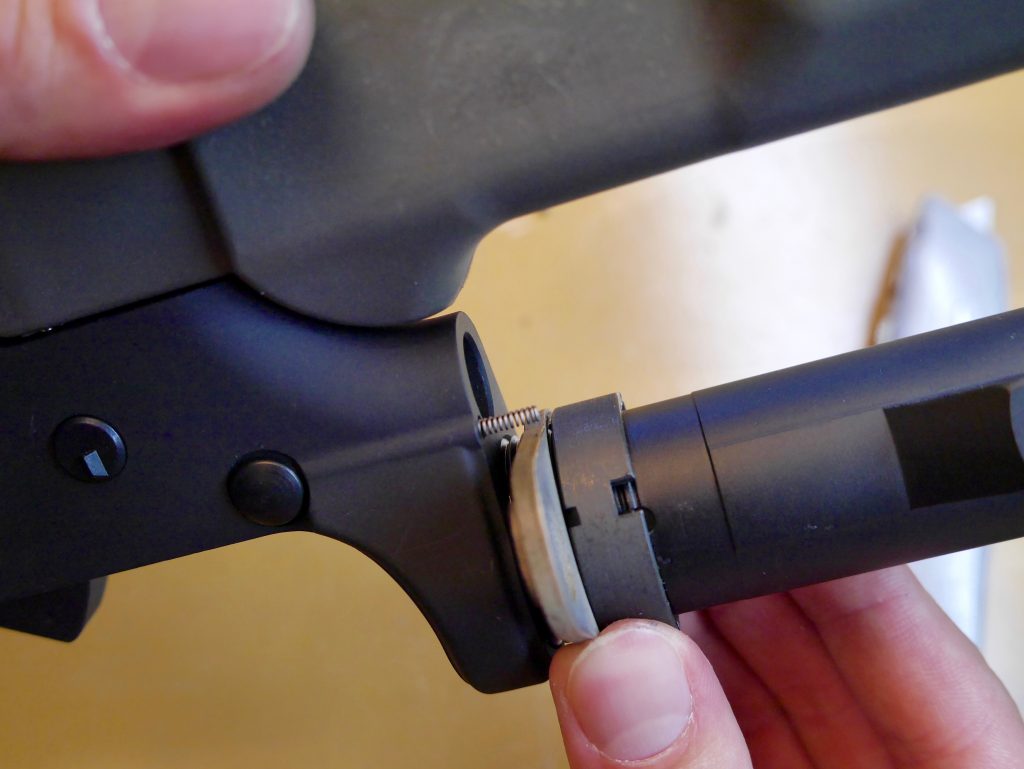
When you're almost done screwing in the buffer tube, have a break to look at the other side.
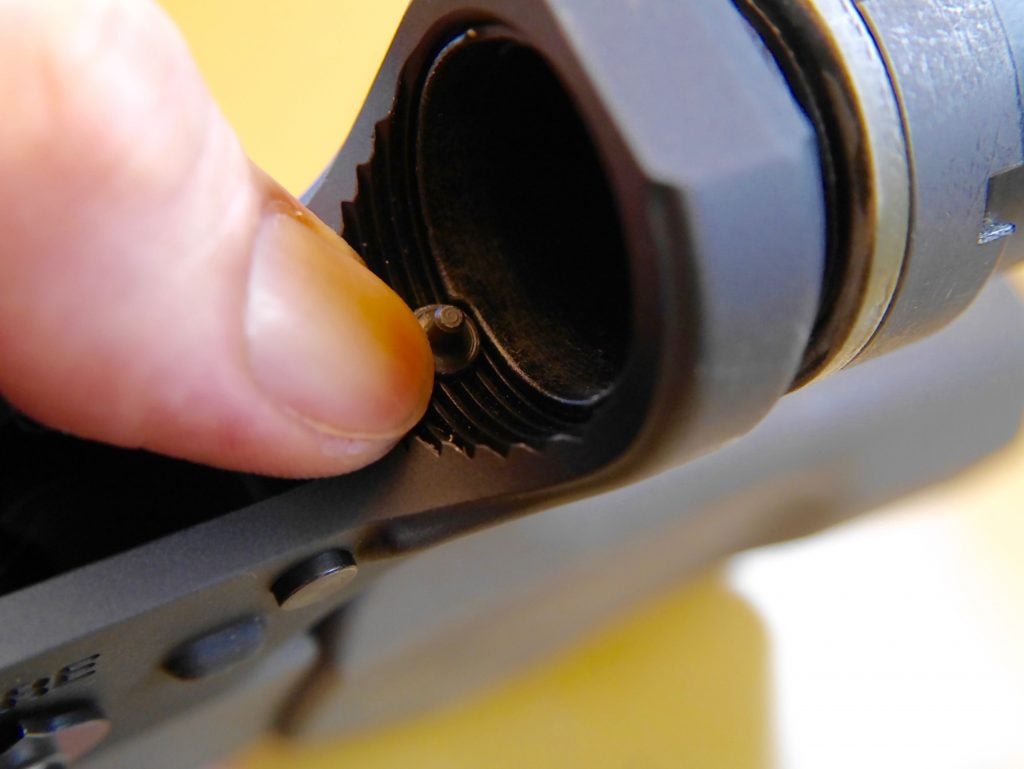
Y'all want to end right earlier the buffer tube reaches the buffer servant.
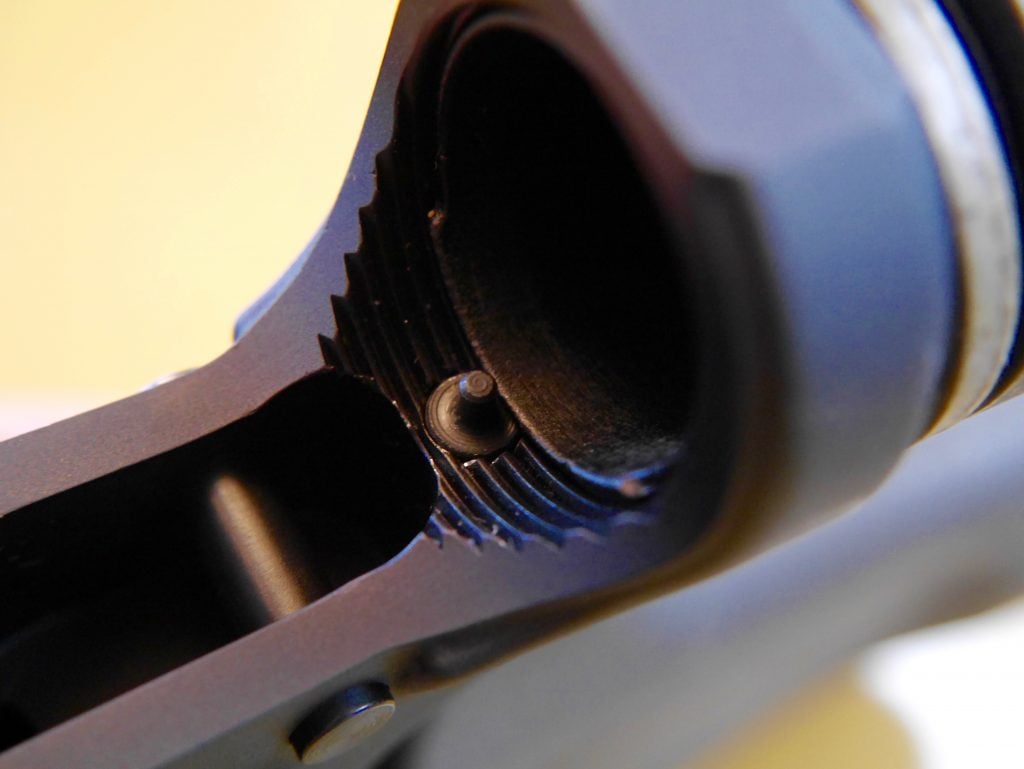
Perfect fit with just a little bit more than of a turn.
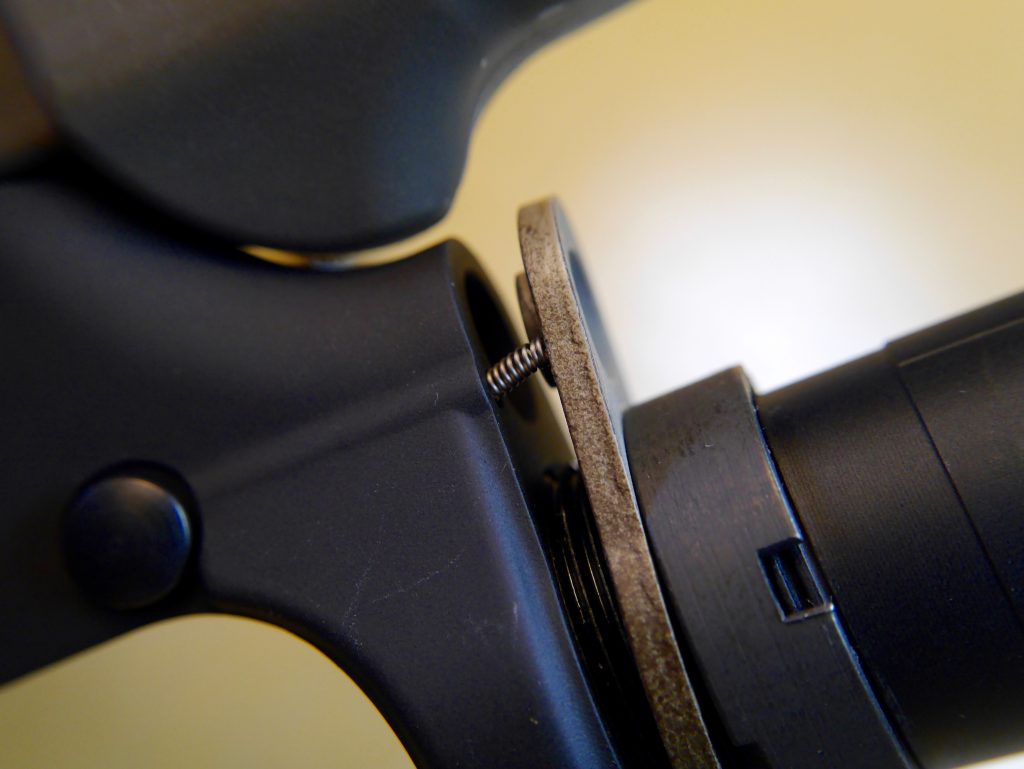
Now you need to match up the end plate with the receiver and also make certain that when the plate is tightened that it will hold the leap.
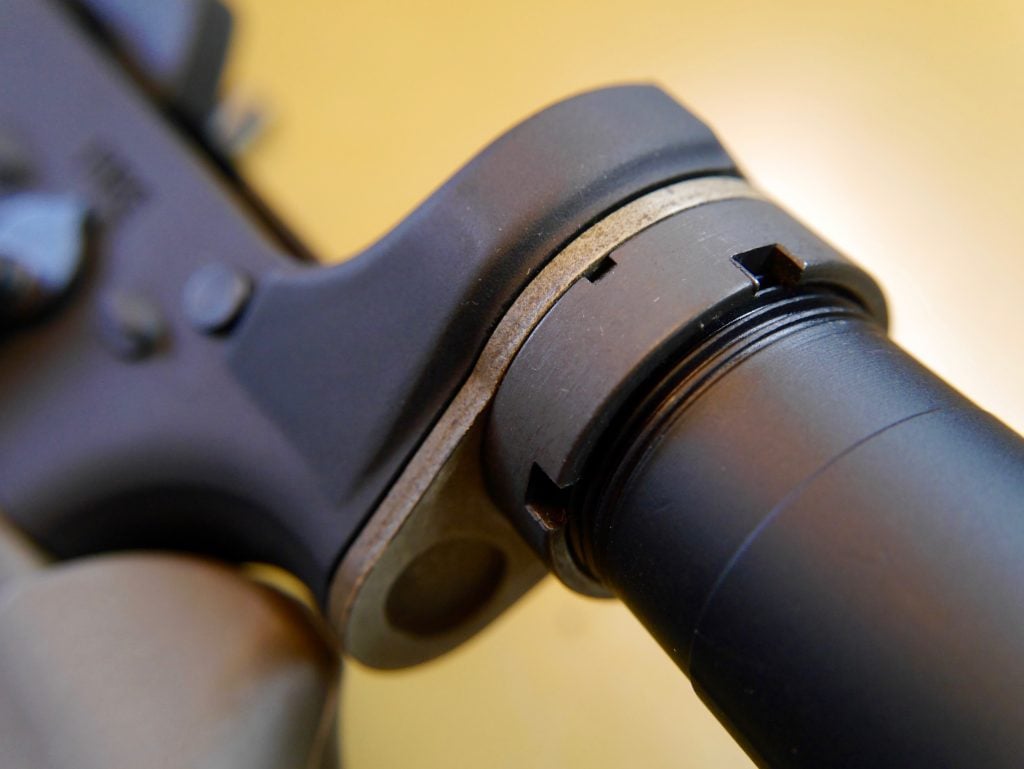
Get-go screwing in the castle nut with your hands first.
If you lot have an AR-15 armorer's tool, it volition have a department to tighten the foursquare cuts. I'd heavily recommend that since it's only a few bucks.
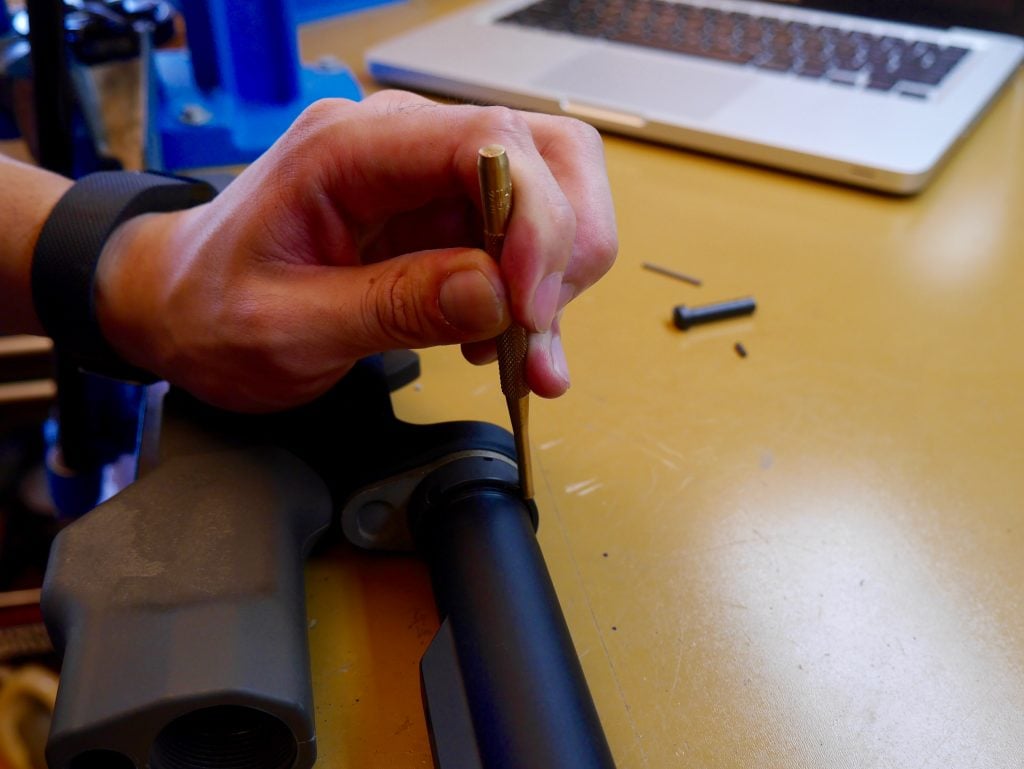
But otherwise, you can also just lightly punch information technology tight.
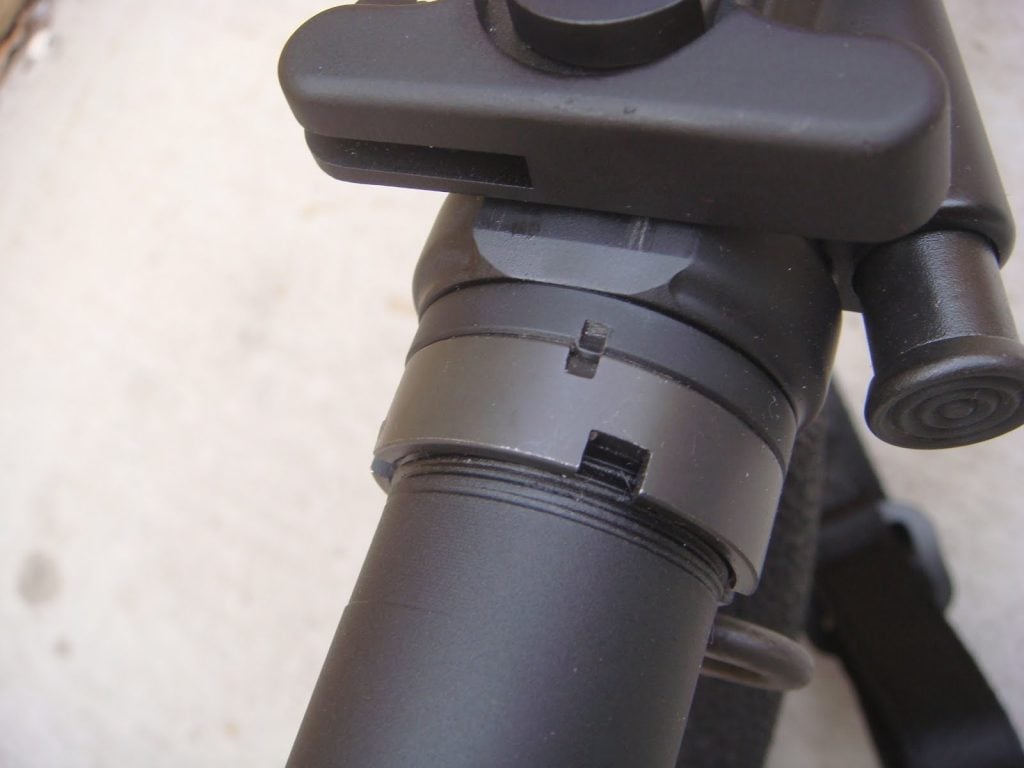
Yous tin also "pale" your castle nut where you utilise a heart punch to smash in the cease plate into the smaller cuts of the castle nut.
I would recommend testing out your lower a lot beforehand since it'southward annoying to undo but actually keeps information technology together. Too, brand certain your finish plate allows staking.
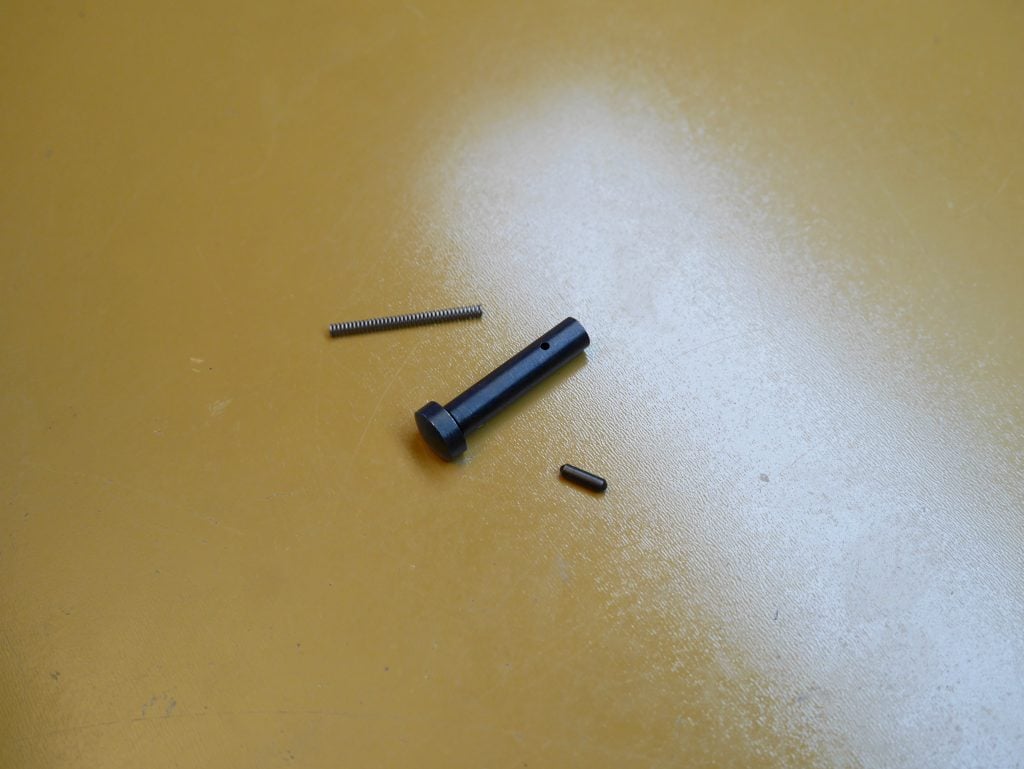
Now find the last pivot, screw, and detent that will be for the front pin pin.
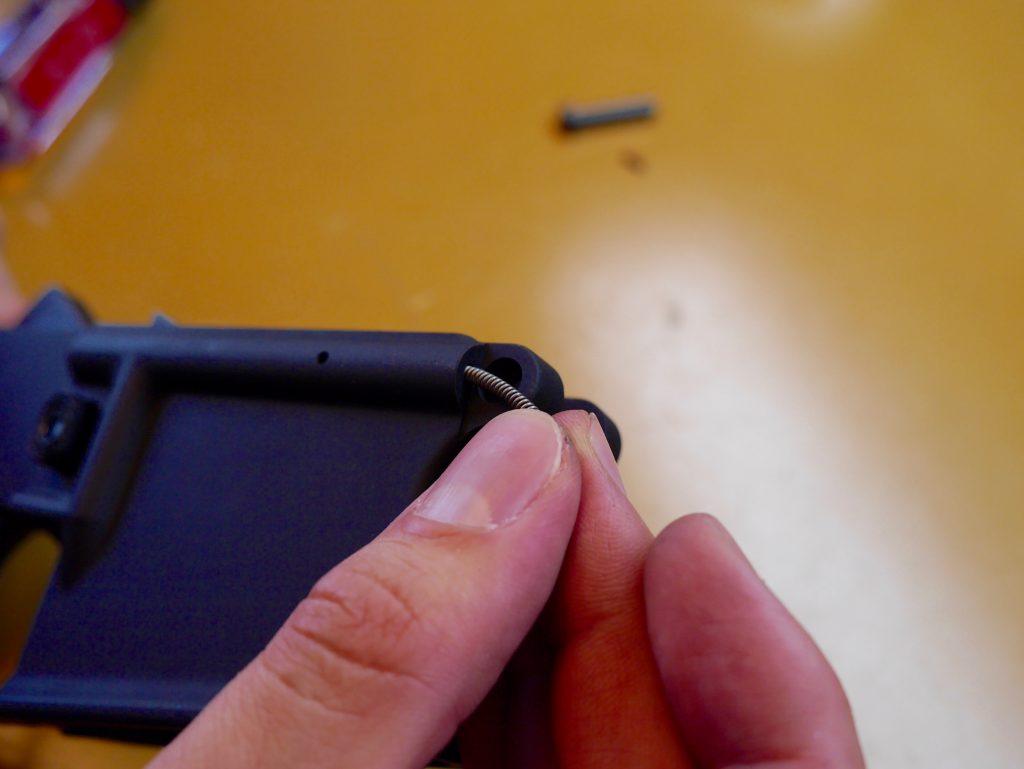
Place the detent bound in first.
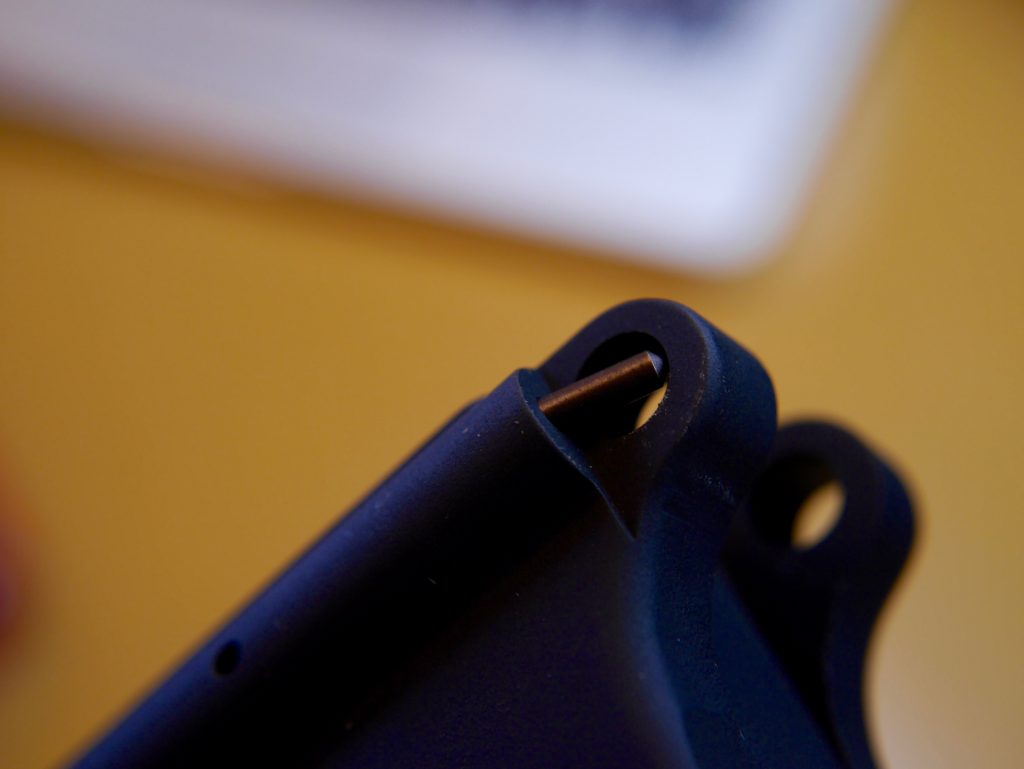
Followed by the detent.
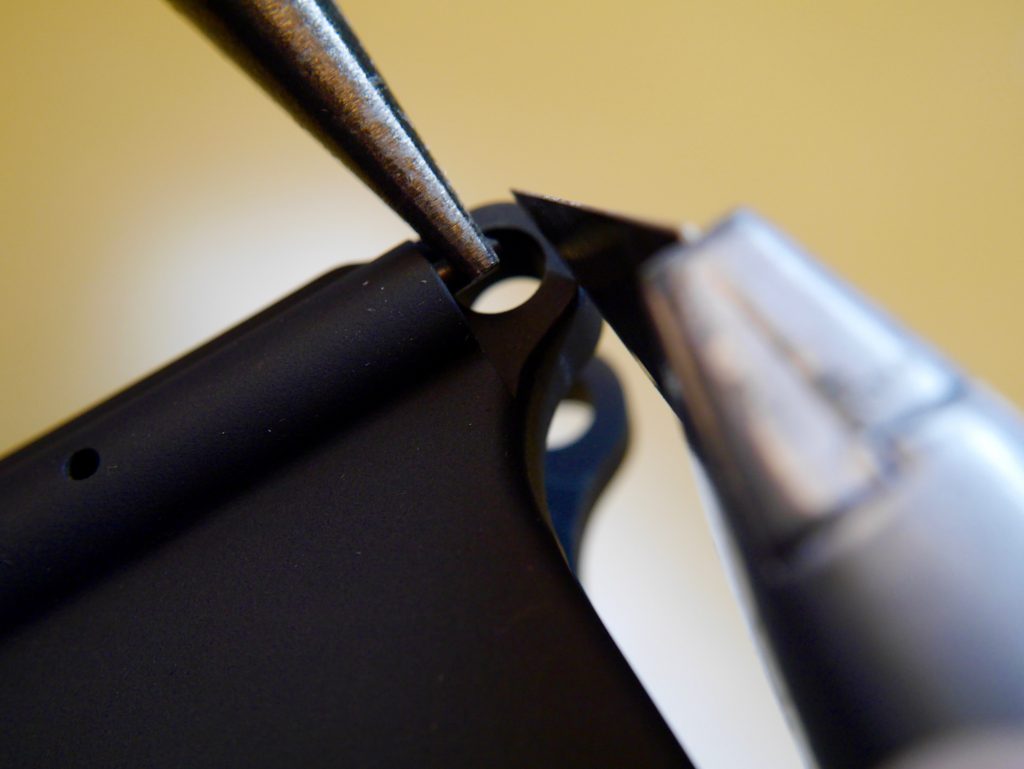
Time to whip out the pliers and utility pocketknife to hold the pivot down flush confronting the receiver since yous'll exist sliding the pivot pin over.
I'd recommend doing this in a sideways paper-thin box or something above you to catch the potential flight detent and spring if y'all mess upwards. Also, you might want some centre protection.
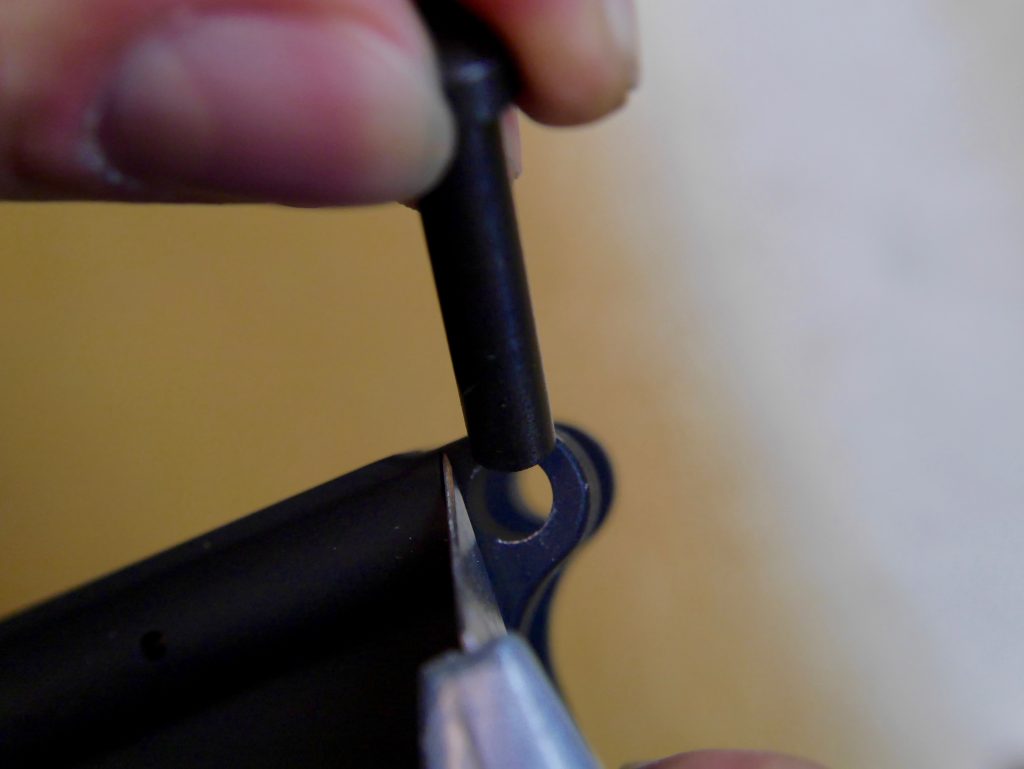
Insert the forepart pin pin over the pocketknife blade with the channel facing where the detent will jump out. This will install the pin pin.
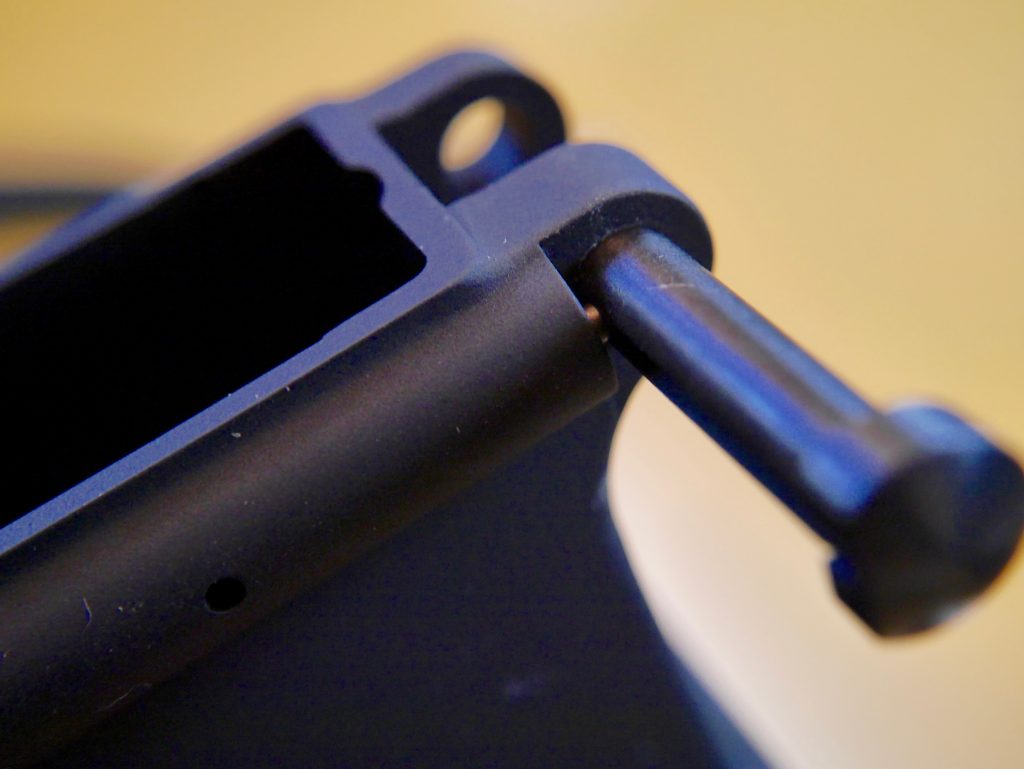
Ta-dah!
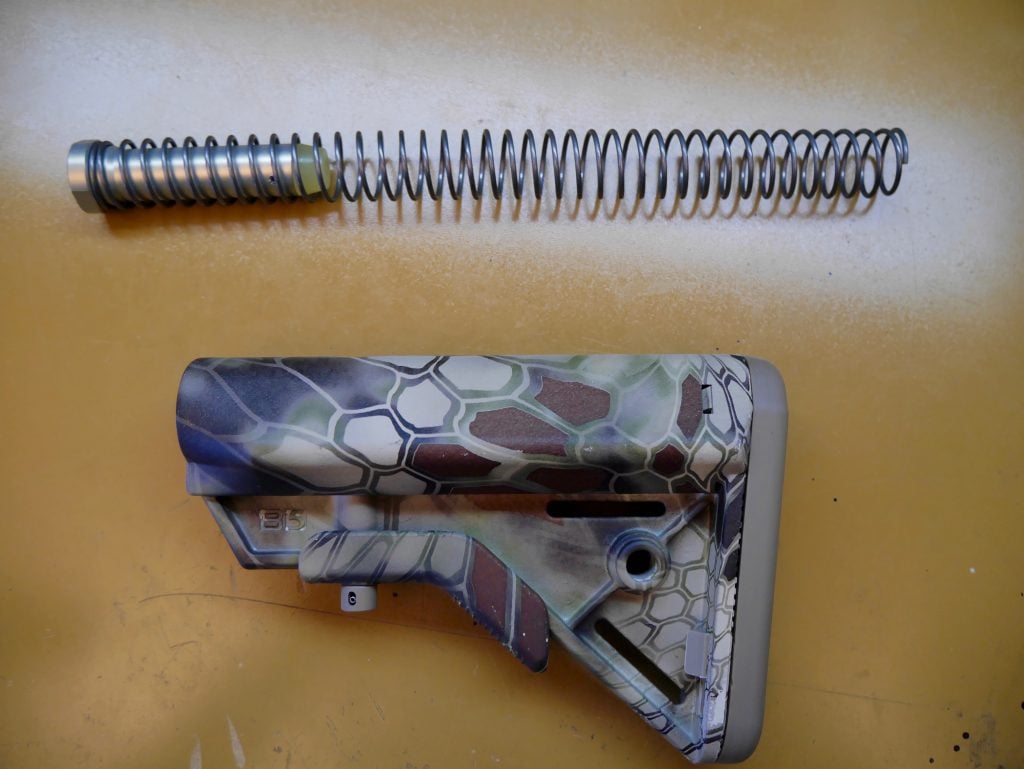
At present find your stock and buffer and buffer spring. Yes, it'south super ugly just I got it since it was the cheapest "colour."
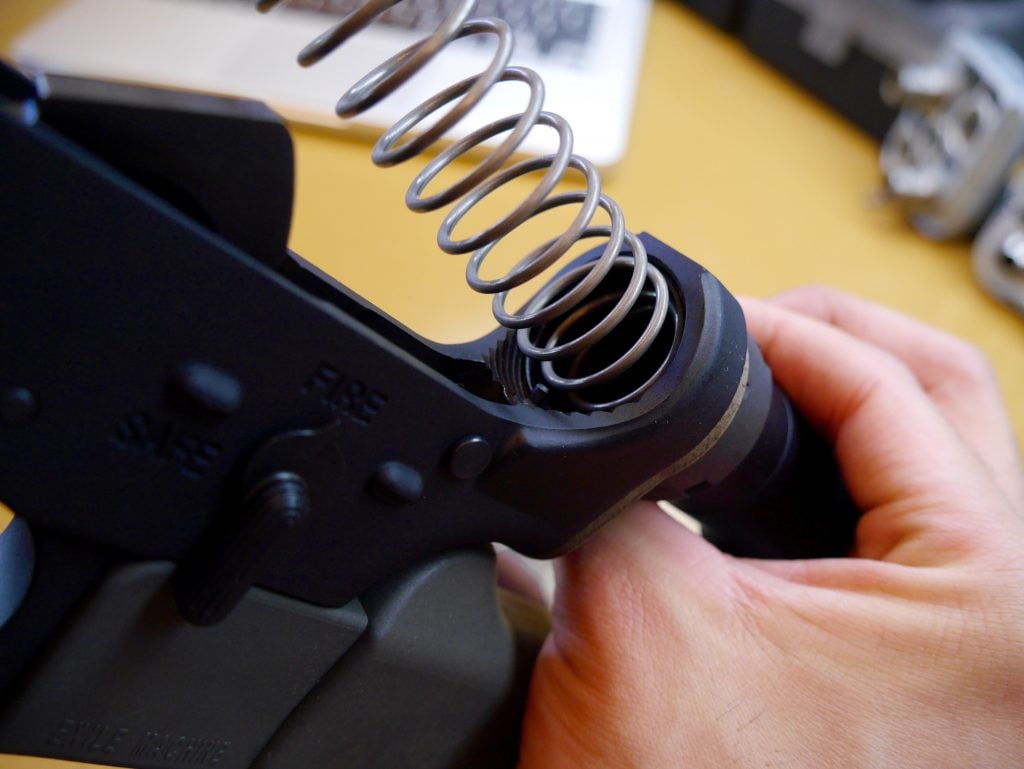
Insert the buffer spring in.
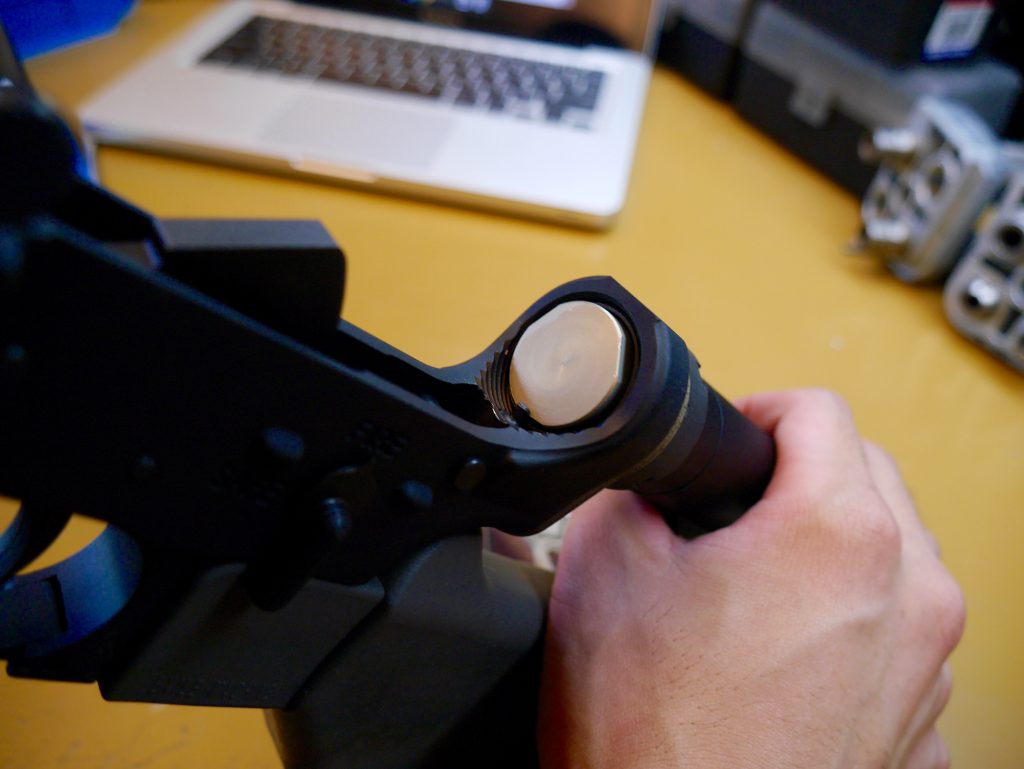
The buffer end volition orient like the higher up.
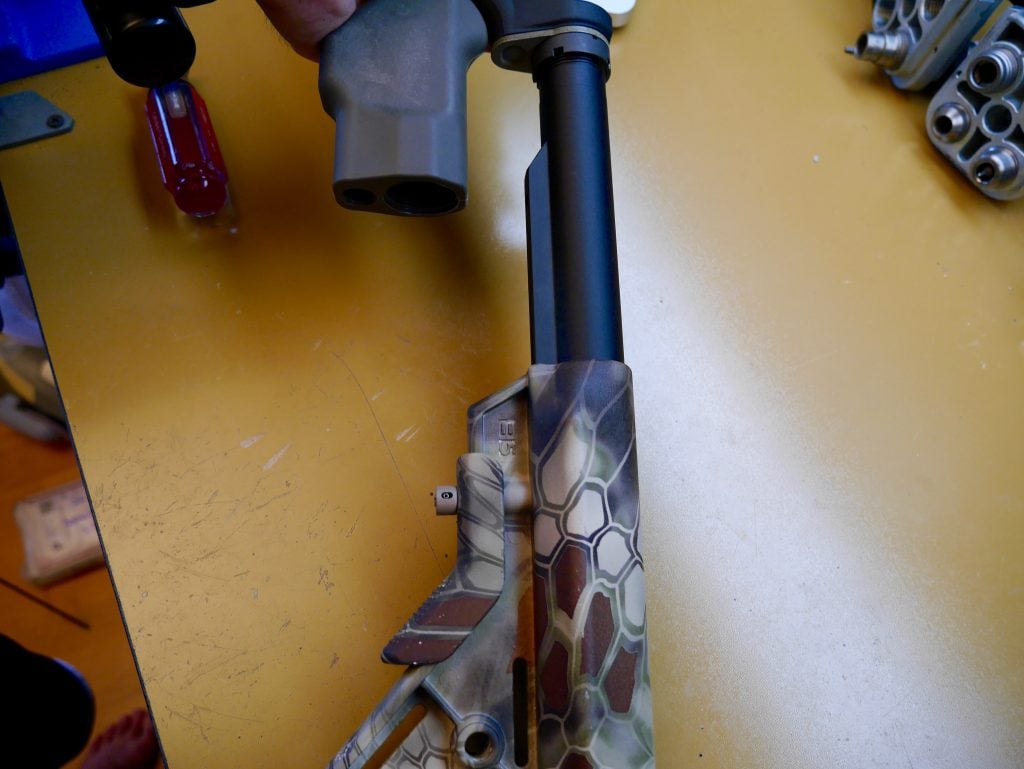
Slide on the stock until it doesn't motility easily.
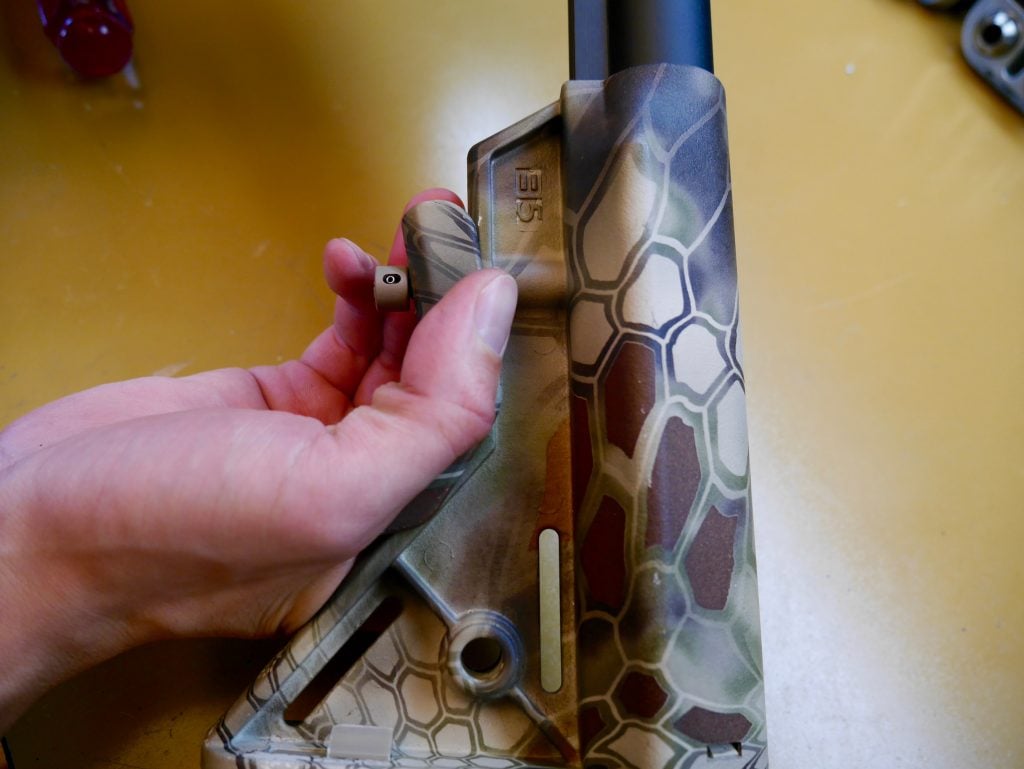
Pull the adjustment tab out and continue moving the stock inwards. You can now use the adjustment tab to select your preferred distance.
And Y'all'RE DONE!
Unless you're in CA and desire to pin your stock, then check out my How to Pin a Collapsible Stock Guide.
Merely if you're like me…you lot want to make your AR-xv lower receiver the best it can be. Here are the upgrades I added immediately.
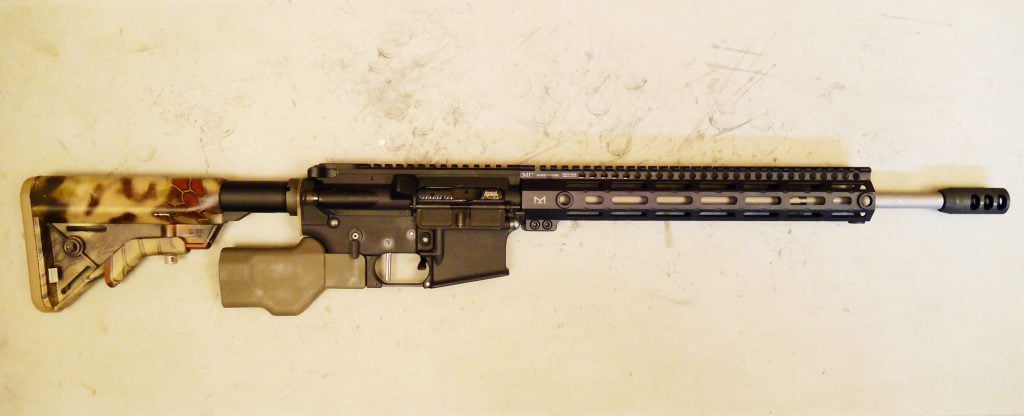
AR-15 Lower Receiver Upgrades
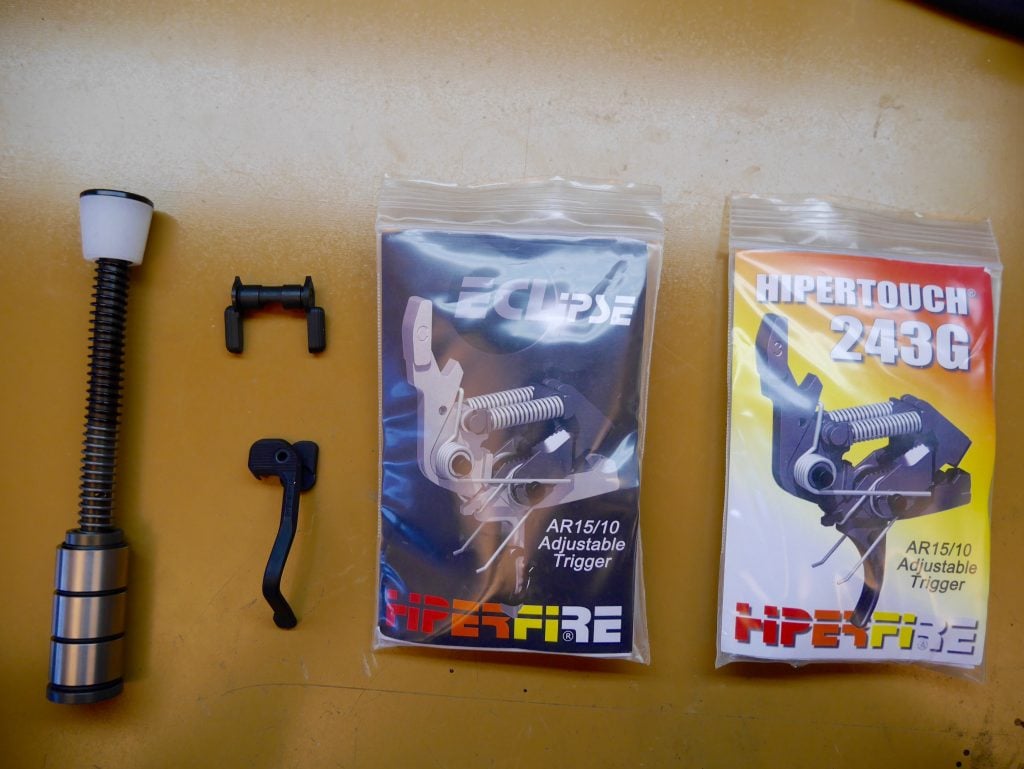
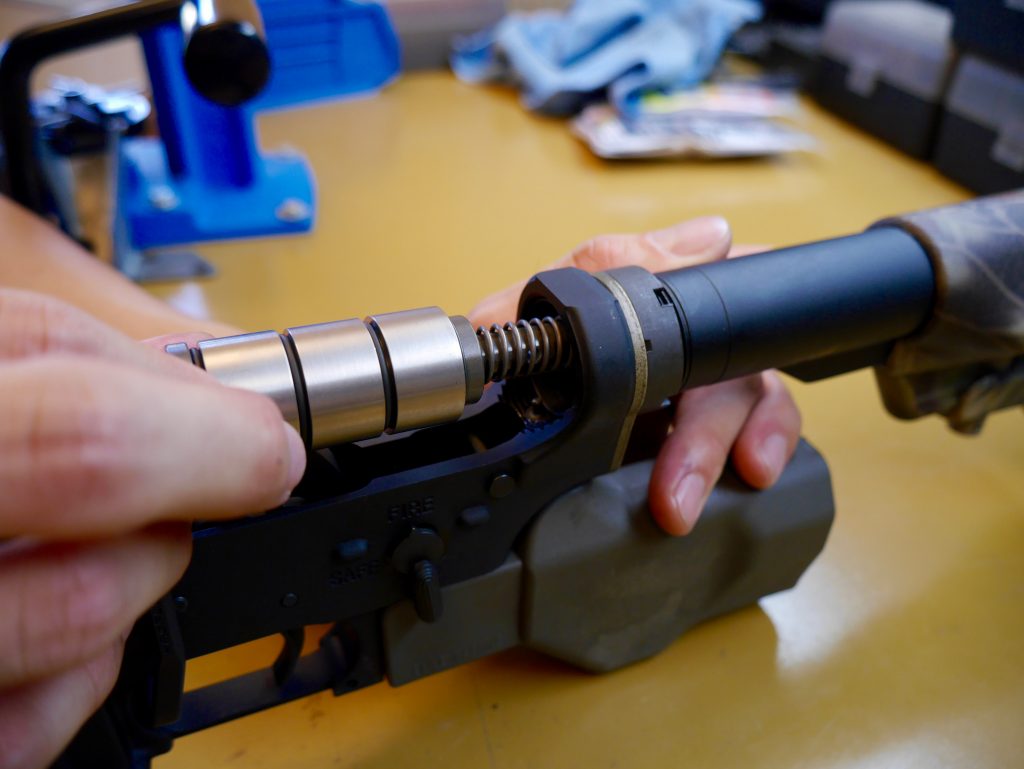
JP Silent Captured Spring
The JP Silent Captured Bound is one of the best upgrades to brand your AR-15 experience similar a pellet gun! It takes away the *sproing* of the traditional buffer tube and drastically reduces recoil.
If yous're going with a lighter BCG, I'd recommend getting it with the additional springs then you tin truly melody your gun. Otherwise, the stock leap works nifty.
Cheque out how to Install & Tune the JP Silent Captured Spring in our article.
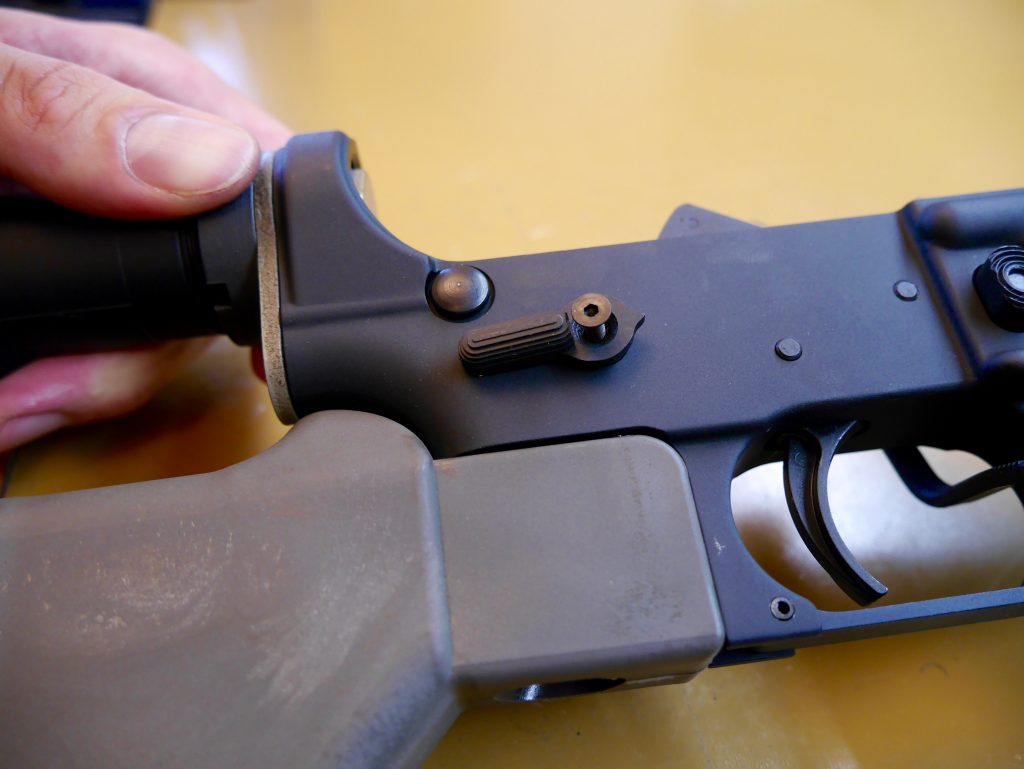
Ambidextrous Safe
An Ambidextrous Prophylactic is useful particularly when yous're running a CA featureless rifle, but if you're a lefty it's critical.
For tips, see How to Install Your Ambi Condom.
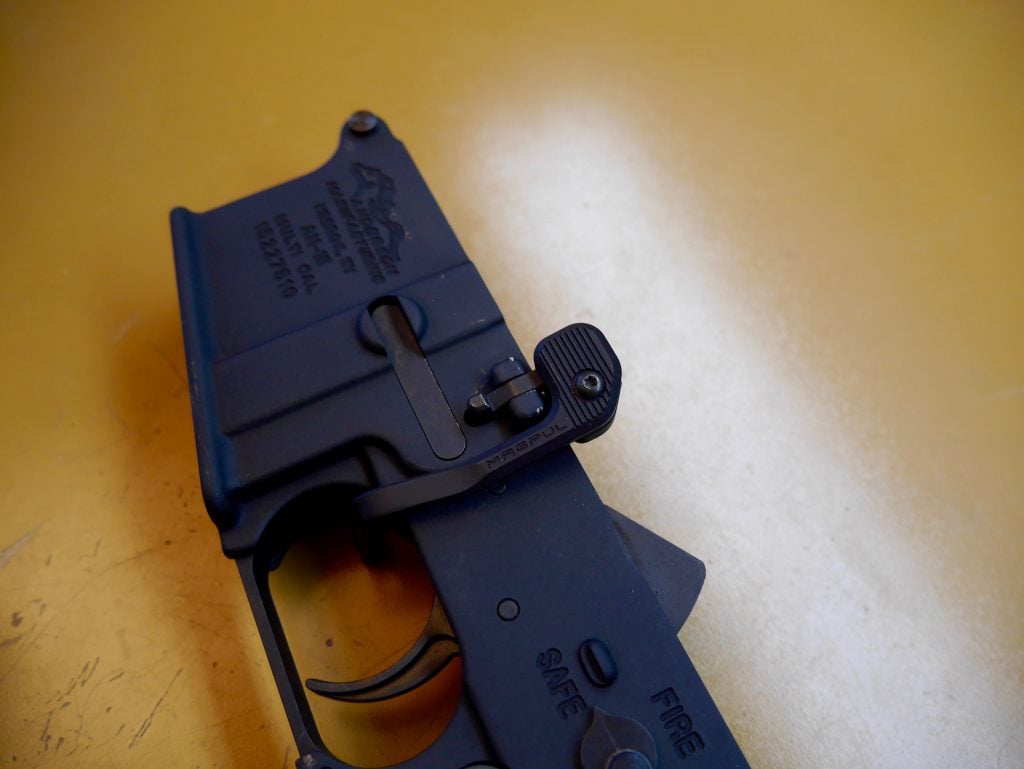
Magpul BAD Lever
The Magpul BAD Lever is on every single one of my lower receivers. Information technology makes manipulating the bolt super piece of cake from your correct hand.
Install information technology in less than 5 minutes.
Hiperfire Trigger
Swapping out the trigger is probably the all-time upgrade you tin can do to your AR-fifteen.
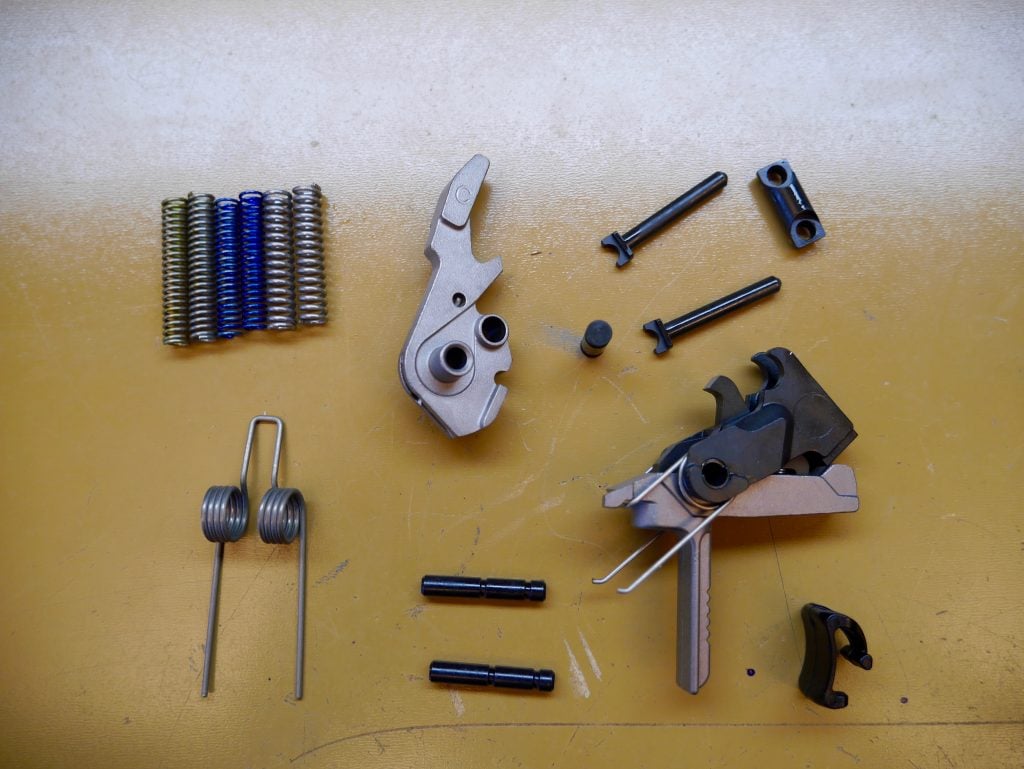
The Hiperfire Trigger is a new single-stage trigger that has no perceptible pitter-patter, little reset, adjustable weights (I run mine at the lightest 2.5-pounds), and really increases the hammer strike power.
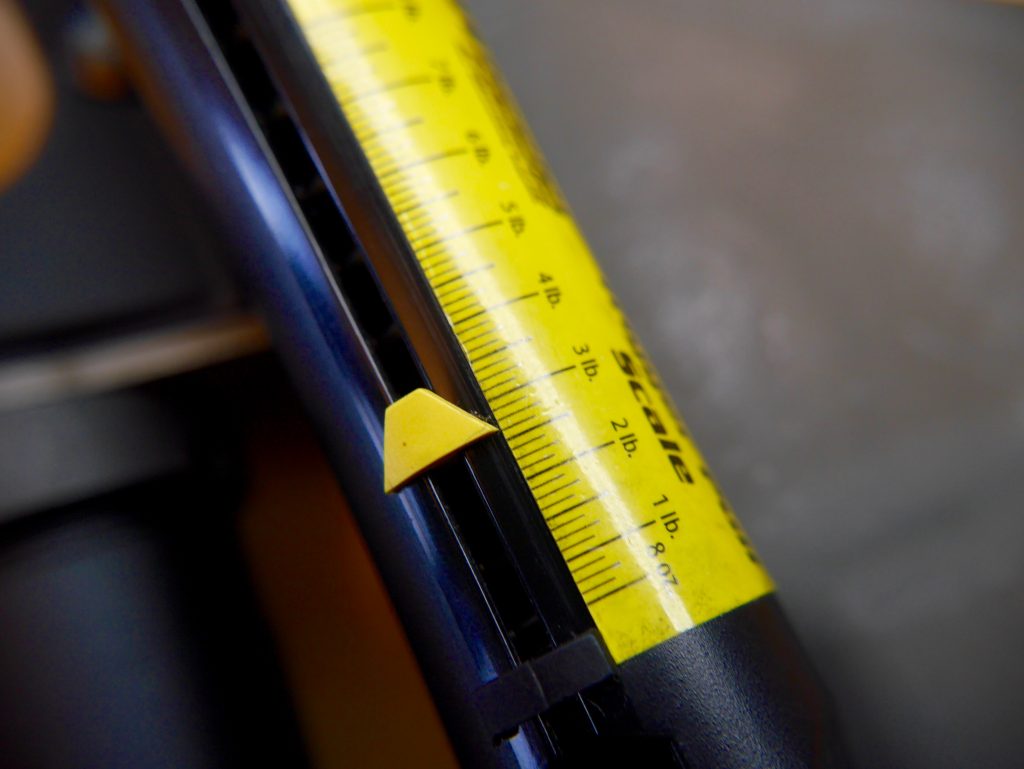
One of the weaknesses of other triggers is that while you can go lite pulls, those sometimes can lead to light primer strikes likewise.
Run across my in-depth review. The installation was also much easier than I expected given the number of parts.
Conclusion
I know it seems intimidating merely building your own AR-fifteen lower receiver doesn't have to be scary. With this guide and the right tools, you lot'll be prepare to rock your AR-15.
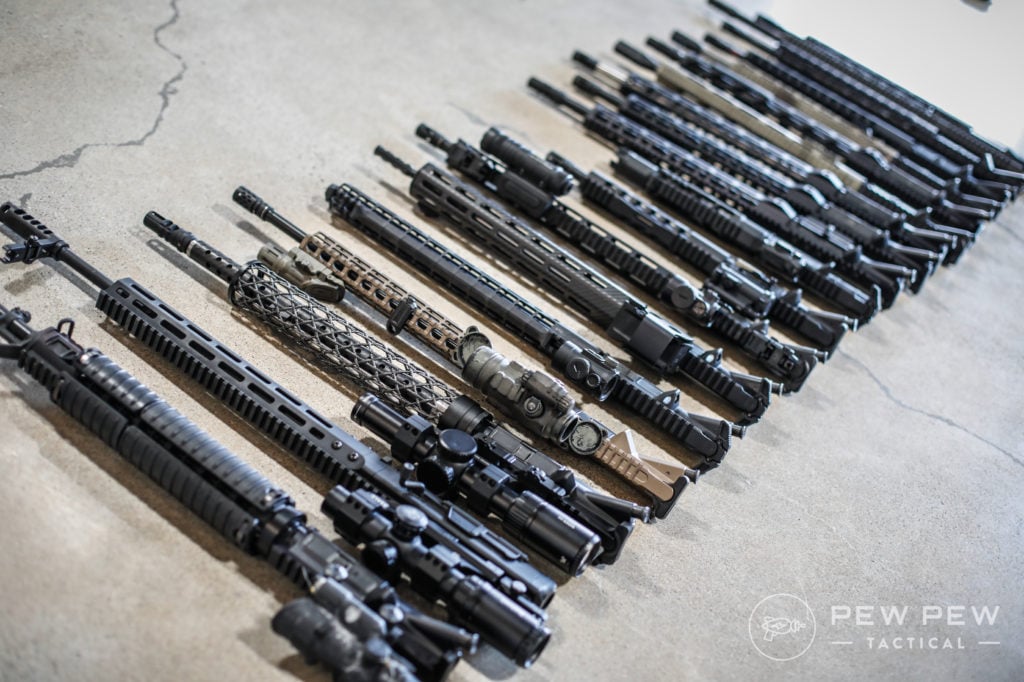
If you need more than help in building your lower or your full AR-15 for that matter, check out Brownells' series on Building an AR-fifteen.
How did your first AR-15 lower build go? Let us know in the comments below. And pair this guide with our How to Build an AR-15 Upper Receiver and also check out the Definitive AR-15 Resource for even more upgrades, optics, etc.
Source: https://www.pewpewtactical.com/build-ar-15-lower-receiver/
0 Response to "how to decide what lower receiver to buy for an ar15 build"
Post a Comment